

Bass Arrangement Studies
Studying great music is one of the fastest ways to become a more expressive bassist. These arrangement studies break down influential recordings into playable bass arrangements that develop groove, phrasing, harmony, and musical awareness.
This free bass arrangement was created as a companion resource to the lesson, How to Write Better Bass Lines Using Repetition, Space, and Note Duration.
Inspired by Dinner Party's "Sleepless Nights," this study demonstrates how repetition, note duration, and space can be used to build stronger bass grooves and create more effective bass lines. As you work through the arrangement, pay attention to the recurring rhythmic phrases, intentional use of rests, and note-length choices that shape the feel of the groove.
Use this study alongside the lesson to analyze the groove decisions behind the arrangement and explore how these same concepts can be applied to your own Hip Hop, R&B, and groove-based bass lines.
Part of the Groove Lab curriculum for developing groove, bass line construction, and musical decision-making.

This free bass arrangement was created as a companion resource to the King Kunta Groove Study lesson.
Inspired by Kendrick Lamar's "King Kunta," this study demonstrates how repetition, space, note duration, and rhythmic placement can be used to create stronger bass grooves and develop a deeper understanding of bass line construction. As you work through the arrangement, pay attention to how recurring rhythmic ideas establish the pocket, how note length shapes the feel of the groove, and how strategic use of space creates forward motion.
Use this study alongside the lesson to analyze the groove decisions behind the arrangement and explore how these same concepts can be applied to your own Hip Hop, Funk, and groove-based bass lines.
Part of the Groove Lab curriculum for developing groove, bass line construction, and musical decision-making.
Groove Lab Study 2: Technique Becomes Vocabulary
Articulation, Groove, and Creative Synthesis
A technique only becomes valuable when it expands your musical vocabulary.
In Groove Lab Study 2, you'll explore how selective picking, articulation, and rhythmic contrast can transform a technical idea into an original composition.
Inspired by principles from Tosin Abasi’s selective picking approach, Victor Wooten’s expressive tapping techniques, and Timbaland-inspired rhythmic production concepts, this study explores how musicians combine ideas from different traditions to create something new.
This is not a technique exercise designed to help you play faster.
It is a guided composition study designed to help you understand:
• How articulation changes the feel of a groove
• How note duration and attack create rhythmic contrast
• How bass can shift between groove, melody, and texture
• How technical concepts become creative tools
• How arrangement decisions create musical momentum
Included:
✓ Original Groove Lab composition
✓ Full bass arrangement breakdown
✓ Backing track for practice and experimentation
✓ Guided analysis of musical decisions
✓ Technique exercises for selective picking and two-hand tapping
✓ Reflection exercises to help you apply the concepts to your own playing
The goal of this study is not to copy the composition.
The goal is to understand the creative process behind it.
Learn how to take a technique, explore its possibilities, and turn it into your own musical vocabulary.
Recommended Level: Intermediate to Advanced Bass Players
Backing Track Arrangements
Modern R&B & Groove Arrangement
Groove Lab Studies are original compositions designed to develop bass line construction through groove, harmony, and musical decision-making.
This original Modern R&B groove blends rich jazz harmony, melodic bass movement, and a laid-back Hip Hop feel to create a practical study in bass line construction and harmonic awareness.
Rather than memorizing another bass line, this arrangement encourages you to explore how rhythm, note selection, phrasing, and articulation work together to support the music. Inspired by the modern approach to groove found in contemporary jazz and R&B, the study emphasizes musical function over technical complexity.
Throughout the arrangement you'll explore:
🎵 Bass note selection over extended jazz harmony
🎸 Groove development through repetition and phrasing
🎼 Voice leading and smooth melodic movement
🎹 Modern R&B harmonic language and bass function
🎯 Intentional articulation and note duration
The goal is to learn the arrangement note for note, analyze the decisions behind each phrase, and use those ideas as inspiration for creating your own original bass lines.
Included
🎼 Complete bass tablature
🎵 Standard notation
📖 Groove Lab Study cover page
Learning Outcomes
After completing this study, you'll be able to:
Connect groove with harmonic function
Build bass lines using jazz harmony and voice leading
Analyze rhythmic phrasing and note selection
Apply Groove Lab concepts to your own compositions and improvisation
Original Lo-Fi Bass Study for Groove, Harmony, and Bass Line Construction
Groove Lab Studies are original compositions designed to develop bass line construction through groove, harmony, and musical decision-making.
Rather than memorizing another bass line, Groove Lab Study 1 challenges you to analyze why the line works and apply those ideas to your own playing.
This original Lo-Fi composition combines jazz harmony with Hip Hop bounce to explore bass note selection outside of traditional diatonic thinking. Instead of treating a key center as the primary organizing principle, the arrangement focuses on harmonic quality, using minor 11, dominant, and diminished sonorities to create movement, color, and tension.
Along the way, you'll encounter many of the core concepts explored throughout Groove Lab, including:
Repetition through motif development and phrasing
Intentional space for creating pocket and clarity
Note duration as a tool for shaping groove
Articulation and its impact on feel
Legato and staccato phrasing as compositional choices
The goal is to learn the arrangement note for note, analyze the rhythmic and harmonic decisions behind each phrase, and use those ideas as a foundation for creating an original bass line of your own.
Learning Outcomes
After working through this study, you'll be able to:
Analyze bass lines through groove and harmony instead of scales alone
Explore note selection over non-diatonic harmonic movement
Recognize how repetition, space, and articulation shape pocket
Apply Groove Lab concepts to create your own original bass lines
This Robert Glasper–inspired Jazz Hop backing track blends modern jazz harmony, soulful chord movement, and laid-back Hip Hop grooves to create an ideal environment for bass practice, improvisation, groove development, and harmonic exploration.
Included with this track are two fully arranged and notated bass lines:
• A beginner bass line focused on chord function, harmonic support, and groove fundamentals
• An advanced bass line exploring voice leading, syncopation, note duration, and melodic bass line construction
Bass tabs are available for download, making this track a practical study for developing groove, harmonic awareness, bass line construction, and modern Jazz Hop vocabulary.
As part of the Groove Lab system, this track is designed to help bass players connect groove, harmony, and musical decision-making in a real musical context. By studying bass line choices in context, students learn to create stronger grooves, navigate chord progressions more confidently, and make more intentional musical decisions.
🎸 Ideal for bass players, students, teachers, and musicians looking for a Jazz Hop backing track inspired by Robert Glasper with real educational value.
Bass Guitar
Worksheets

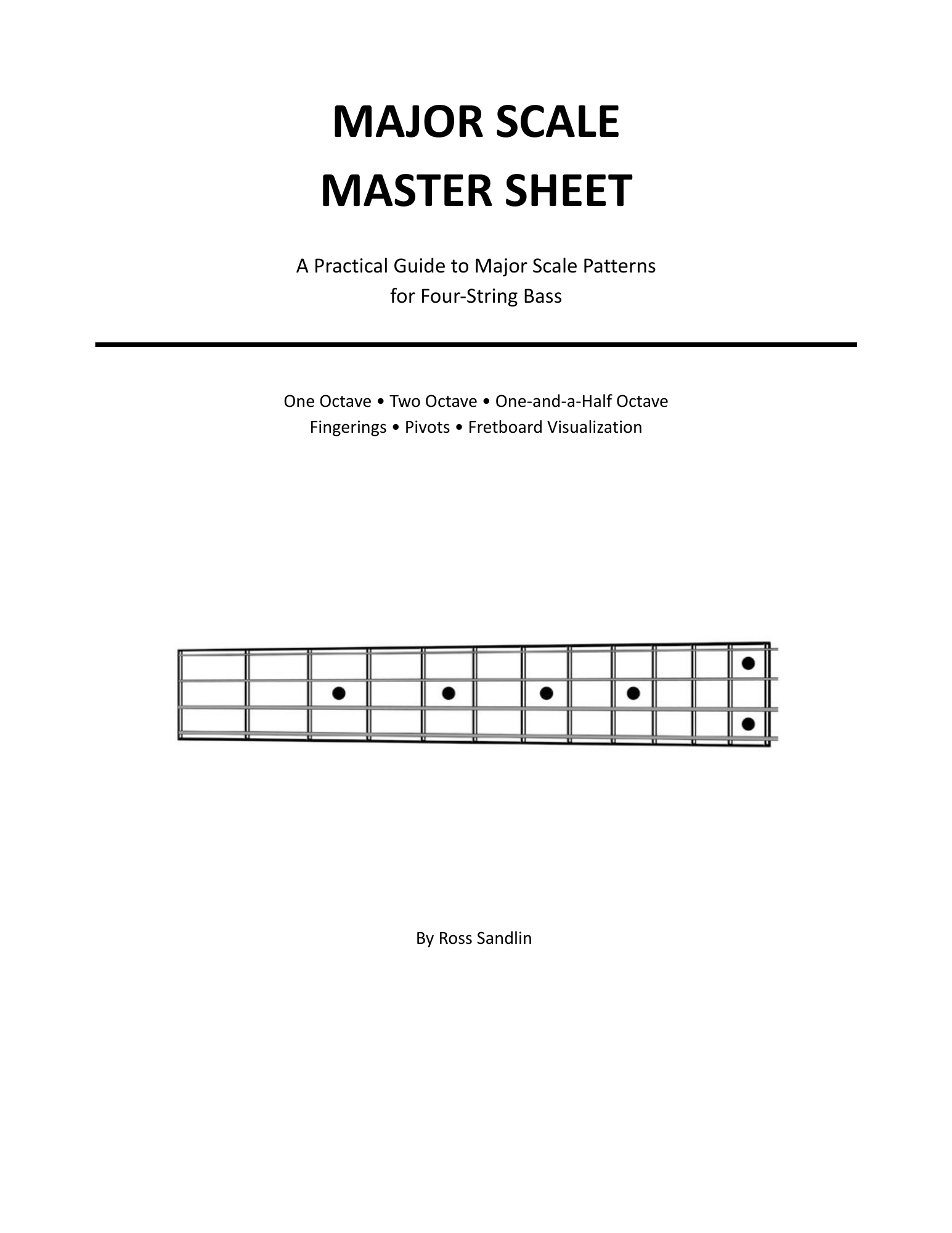
Build real confidence with the most important scale in music.
The Major Scale Master Sheet is a structured, musician-focused practice guide designed to help you understand, visualize, and apply the major scale across the fretboard—not just memorize shapes.
This worksheet bridges the gap between theory and real playing, helping you connect scale patterns to chord tones, harmony, and musical decision-making.
You’ll use this to:
Navigate the fretboard with clarity and consistency
Understand how scales connect to chords and progressions
Build a foundation for improvisation, bass lines, and songwriting
Ideal for bass and guitar players who want to move beyond patterns and develop real musical understanding.
Use it as a daily practice framework or as a reference tool when learning songs, writing, or improvising.
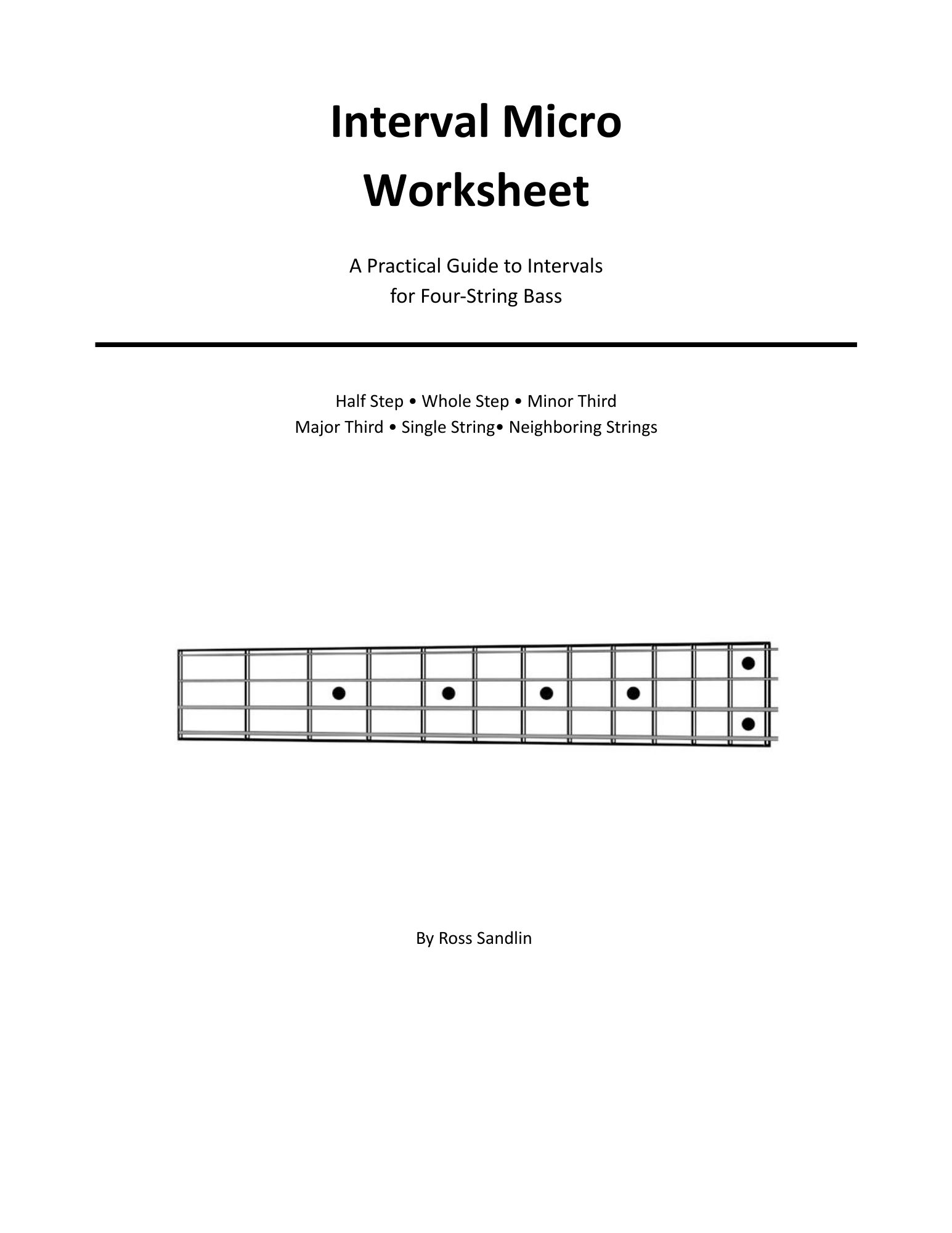
Develop true harmonic clarity on the fretboard.
The Interval Micro Worksheet is a focused, practical guide designed to help bass players quickly recognize and apply intervals in real playing situations.
Rather than approaching theory abstractly, this worksheet trains you to see and hear relationships between notes, giving you control over how your lines function harmonically.
You’ll use this to:
Identify intervals instantly across the neck
Strengthen fretboard awareness and note relationships
Improve accuracy when outlining chords and writing bass lines
Ideal for bass players who want a clear, efficient way to build foundational theory into their playing.
Use it as a short, repeatable practice tool to reinforce harmonic awareness and support everything from groove playing to improvisation.