
Inside Groove Lab: Student Performances and Musical Analysis
Groove Lab Studies: Learning Through Musical Decisions
Most bass education teaches players what to play through tabs, transcriptions, and tutorials. While those resources build vocabulary, they rarely explain why musical choices work or how to evaluate your own decisions when creating bass lines.
Groove Lab was built around a different question:
How do musicians learn to make musical decisions?
Each Groove Lab Study combines original music, guided analysis, creative application, and reflection. Rather than memorizing songs, students learn to identify rhythmic and harmonic ideas, experiment with their own solutions, and evaluate the musical impact of their choices.
The student reflections below demonstrate that process in action. Rather than measuring success by how accurately a bass line is copied, they reveal how musicians develop the vocabulary, awareness, and confidence needed to create bass lines of their own.
If you're new to Groove Lab, begin with Timing & Internal Pulse to develop a reliable sense of pulse, then explore Groove Vocabulary to learn the language used throughout these studies. Once those foundations are in place, Groove Lab Study 1 demonstrates how those concepts work together in an original composition.
Experience the Same Groove Lab Study
The reflections below all come from students who completed the same Groove Lab Study.
If you'd like to experience the lesson before reading their observations, explore the complete study yourself.
Groove Lab Study:Groove, Feel, and Jazz Harmony
🎧 Listen to the Original Backing Track
Experience the Terrace Martin–inspired Modern R&B groove that serves as the foundation for the study.
See how motif, voice leading, note duration, and harmonic color work together to create a memorable bass line.
🎼 Download the Bass Arrangement
Study the tabs and notation, then experiment with your own musical decisions using the Groove Lab framework.
Groove Lab Study: Groove & Note Duration
“Note Duration. Following the proper notation and not allowing myself to follow the backing track. In this case I was allowing the first 2 16th notes of every measure to sound like quarter notes. This was the same for the quarter note on the & of 2, I would double it to make a whole note. This changed the feel of the song. The duration is important for not playing over other instruments. This groove the bass is more punchy over extending the note muddies the tone of the track. This leads to space, keeping the empty space is the same as overextending a note, you will play over other instruments. Or you will overplay losing the grove.”
Instructor Analysis
One area this student has shown significant progress in is moving away from simply “copying” rhythmic patterns from other instruments and instead finding a more intentional and personal place in the pocket for the bass to sit.
This reflection demonstrates a shift from imitation to intentional listening. Rather than unconsciously matching the rhythm of other instruments, the student recognized that note duration and space are independent musical decisions. That awareness allows the bassist to support the groove instead of competing with it.
They’ve also developed a stronger awareness of note duration, understanding how long notes should ring in order to support the groove, rather than “playing over” the track by allowing notes to sustain too long.
This kind of development points to an important and often overlooked aspect of groove: space and function within the ensemble. Overall, their awareness of how the bass interacts within both the rhythm section and the full band has clearly evolved, and that growth is reflected in their playing.
Groove Lab Study: Harmonic Tension
“The Tension notes brought flare to harmony and instead of just doing something chromatic it added the tension in a way that was quickly resolved to had momentum to the piece and grab the listeners’ attention. Especially by utilizing 3 notes from the chord instead of just 2 bridges the melody and the groove and the style all together in a way that is not “too busy”. The dissonance comes in and then is resolved in the Chord change. The Tension chord tied the chord changes together, in a way that added color.”
Instructor Analysis
One concept this student demonstrated increased awareness of is the relationship between tension notes, their harmonization, and how both impact the overall groove and harmonic movement of a song.
What's encouraging here isn't simply that the student used tension notes. It's that they recognized why tension works. They connected harmonic color, forward motion, and listener expectation into one musical decision. That's the kind of thinking arrangers use every time they write music.
They correctly identified that the most effective placement for tension and dissonance is often leading into a chord change, where it helps create forward motion and resolution. They also recognized that harmonizing an entire chord around tension tones can add additional color and depth to a composition.
This reflects an advanced compositional concept used by arrangers and composers: the ability to generate and control musical tension to maintain interest and energy without needing to change tempo, tonal center, or emotional context.
Groove Lab Study: Rhythm & Self Diagnosis
“I learned that I need to write down the notes of the chords and internalize them while playing, that alone would have cleared up a lot of confusion about the nature of harmonizing for me. I also learned the importance of rhythmic subdivision, which is drafted to help you "fly by wire" through fog, if you know exactly when and where you're supposed to put your notes based on their duration.”
Instructor Analysis
Where this student showed the most improvement was in self-reflection, specifically, their ability to identify sources of confusion and begin strategizing ways to address them.
The more clearly a student can identify, name, and describe a problem in their playing or conceptual understanding, the more effectively they can create targeted steps for improvement. Clarity at this stage is what turns vague frustration into actionable practice.
It’s easy to become focused on performing something “correctly” and lose sight of how and why certain concepts shape bass line creation. In this case, the student demonstrated a willingness to step back and honestly assess where they are in the learning process.
One of the most valuable skills any musician can develop is the ability to accurately diagnose their own playing. Once students can identify the source of a problem, practice becomes focused instead of repetitive. That shift—from frustration to diagnosis—is one of the central goals of Groove Lab.
Groove Lab Is More Than Learning Songs
The student reflections you've just read aren't examples of musicians memorizing bass lines.
They're examples of musicians learning how to think.
Each student listened to the same backing track, studied the same arrangement, and practiced the same musical ideas. Yet each came away with a different insight because they learned to evaluate their own musical decisions instead of simply searching for the "correct" notes.
That's the purpose of Groove Lab.
Not to teach more songs.
Not to memorize more scales.
But to develop the vocabulary, awareness, and confidence to create bass lines of your own.
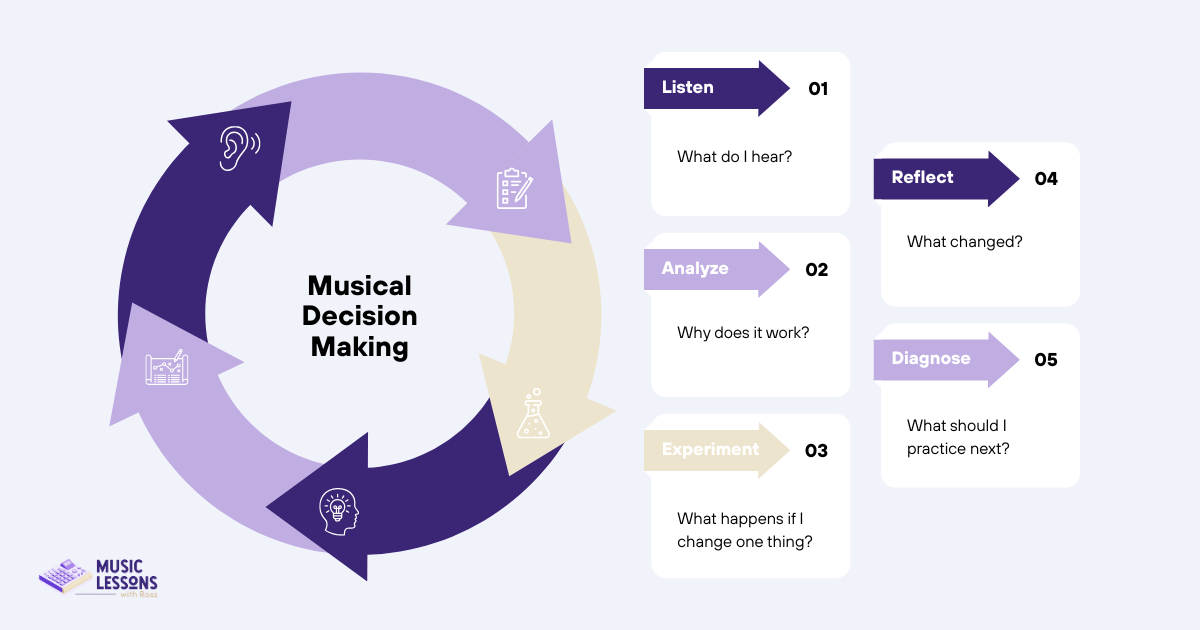
Every Groove Lab Study is designed to move you through the same process:
Listen before you play.
Analyze before you imitate.
Experiment before you memorize.
Reflect before moving on.
Diagnose what to practice next.
Over time, that process transforms practice from repeating information into developing musical judgment.
Because great bass players don't just know what to play.
They understand why it works.
Continue Your Groove Lab Study
If you'd like to experience this process yourself, start with the same study these students completed.
🎧 Listen to the Original Modern R&B Backing Track
Hear the musical ideas before analyzing them.
📖 Read Groove Lab Study 1: Groove, Feel, and Jazz Harmony
Explore how motif, voice leading, harmony, and groove work together to create a memorable bass line.
🎼 Download the Bass Arrangement
Study the tabs, experiment with your own variations, and apply the Groove Lab framework to your own playing.
Or, if you'd like personalized guidance, schedule a Groove & Harmony Diagnostic and receive feedback on your playing along with a clear roadmap for what to practice next.