
Bass Guitar Hip Hop Lessons
Develop groove, improve your timing, and learn how to play bass in the pocket for hip hop and R&B.

Groove Lab One: Hip Hop Bass Lessons
How To Write Bass Lines For Hip Hop Beats
Most bass players approach a beat by asking:
“What notes fit these chords?”
But that’s only part of the equation.
The real question is:
What is the beat doing, and how should the bass respond?
In this lesson, I want to introduce a framework I use in my own playing and teaching:
The Groove Response Framework
A simple way to build bass lines by analyzing:
What the beat is doing
What that creates (feel, tension, space)
How the bass should respond
Listen To The Beat
Before analyzing anything, listen to the groove on its own:
As you listen, notice:
• The push/pull feel in the drums
• The off-grid hi-hats
• The syncopated kick pattern
How Bass Works with Drums in Hip Hop
Beat Analysis
What the Beat is Doing
Dilla-style push/pull feel
Slightly off-grid hi-hats
Loose, human groove
Syncopated kick pattern
What That Creates
This combination creates a groove that feels:
Unstable in a musical way
Open and breathable
Rhythmically expressive rather than rigid
Here’s how the bass responds to the beat using the Groove Response Framework:
Bass Decision
Because the groove is loose and syncopated:
Bass notes mostly align with the kick
This anchors the groove
Prevents the track from feeling too abstract
When the drums are loose, the bass often needs to provide clarity.
Voice Leading in Hip Hop Bass Lines
What the Harmony is Doing
Non-functional progression: Abmin11 → Amin13 → Gbmin11
Dense chords with extensions
Built-in tension (no traditional resolution)
What That Creates
Harmonic ambiguity
Constant tension
Lack of tonal “home base”
Because the harmony is dense and unstable:
I prioritized voice leading
Used half-step movement
Focused on closest note connections
When harmony is complex, the bass should simplify movement to maintain clarity.
What the Sample is Doing
Rhythmically simple
High-frequency focused
Static (single chord loop)
What That Creates
Space in the low/mid range
Minimal rhythmic competition
Bass Response
Because the sample leaves space:
The bass can define movement
Doesn’t need to compete rhythmically
Can shape the harmonic direction
Phrase Design
I divided the bass line into two contrasting halves:
First half:
Locked with the kick
More staccato
Rhythmically grounded
Second half:
More legato
Independent phrasing
Less tied to the kick
This contrast creates:
Tension and release
Movement within the groove
A sense of conversation, not repetition
If the bass were more complex:
Groove becomes crowded
No space to feel timing
If the bass only played roots:
Redundant
Lacks personality
Doesn’t respond to harmony
Key Takeaways
The Groove Response Framework:
Analyze what the beat is doing
Identify the musical impact
Choose a bass response that:
Anchors
Contrasts
or simplifies
Great bass lines aren’t written in isolation,
they are responses to the groove.
Book a Hip Hop Bass Lesson
If you want more advanced harmonic movement, check out this voice leading lesson.
If you want more advanced rhythmic phrasing, check out this J Dilla groove lesson.
If you want exercises with tabs, check out this J Dilla groove Practice Kit.
Voice Leading for Bass: How to Connect Chords and Write Smoother Bass Lines
Why do some bass lines sound connected while others feel jumpy?
Two bass players can play exactly the same chord progression.
Both choose the correct notes.
Yet one bass line feels smooth and musical while the other feels disconnected.
The difference is often voice leading.
Voice leading isn't about playing more notes.
It's about choosing better transitions between chords.
That's why it's one of the most important skills in Jazz, Hip Hop, Neo Soul, R&B, and modern bass playing.
What is voice leading?
Voice leading is the practice of connecting one chord to the next using the smallest and most musical movement possible.
Instead of jumping from root to root, bass players choose notes that naturally lead into the next harmony.
Good voice leading creates smoother bass lines, clearer harmony, and stronger melodic flow.
What is Voice Leading (on bass)?
Voice leading on bass is the practice of moving between chords using the closest available note in the next chord.
Instead of thinking:
“What’s the next root?”
You start thinking:
“What’s the nearest note I can move to?”
Here’s the hierarchy of smooth movement:
Half step (minor 2nd) → smoothest possible motion
Whole step (major 2nd) → still very connected
Minor 3rd → slightly more movement, still musical
Major 3rd → edge of smoothness
👉 Anything beyond that begins to sound like a jump, not a connection.
This is the foundation of voice leading:
Minimize distance
Maximize connection
Let lines flow instead of leap
Why It Matters
A strong bass line lives at the intersection of two things:
👉 Groove + Clarity
Groove → how the line feels rhythmically
Clarity → how clearly the harmony is expressed
When those two are working together, the bass line feels grounded and intentional.
Now add voice leading:
👉 Closest note movement between chords
This is where things level up.
Because now:
The groove feels consistent
The harmony connects smoothly
The line becomes memorable
👉 This is how bass lines turn into earworms
Not through complexity—but through:
Strong placement
Clear harmonic movement
Smooth transitions
Visualizing Voice Leading
To make this concept practical, I like to visualize it.
I’ve created a series of graphs that map out:
The notes of each chord
The intervallic distance between every possible note pair
This allows you to quickly identify:
👉 the closest available note when moving between chords
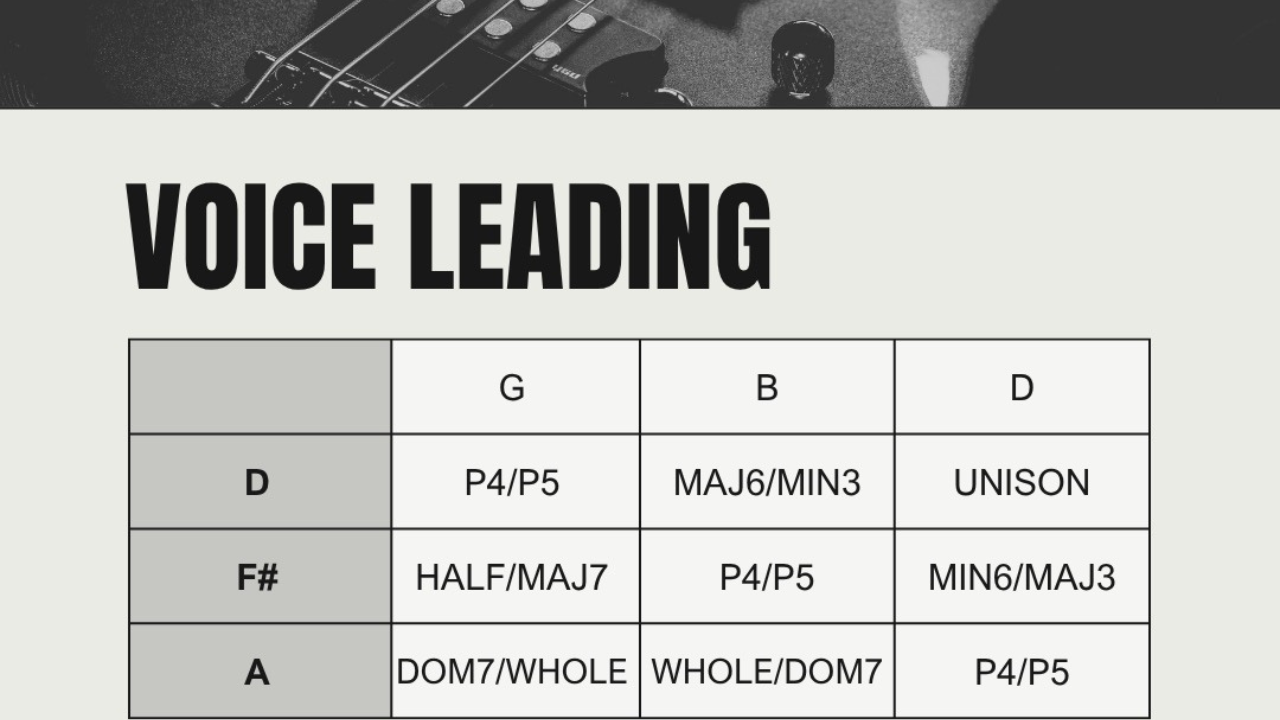
Example 1: D Major → G Major
This graph shows:
All notes in D major
All notes in G major
The distance between each note
From here, you can immediately see:
Where half-step resolutions exist
Where whole-step connections are available
Which movements are smooth vs. which are jumps
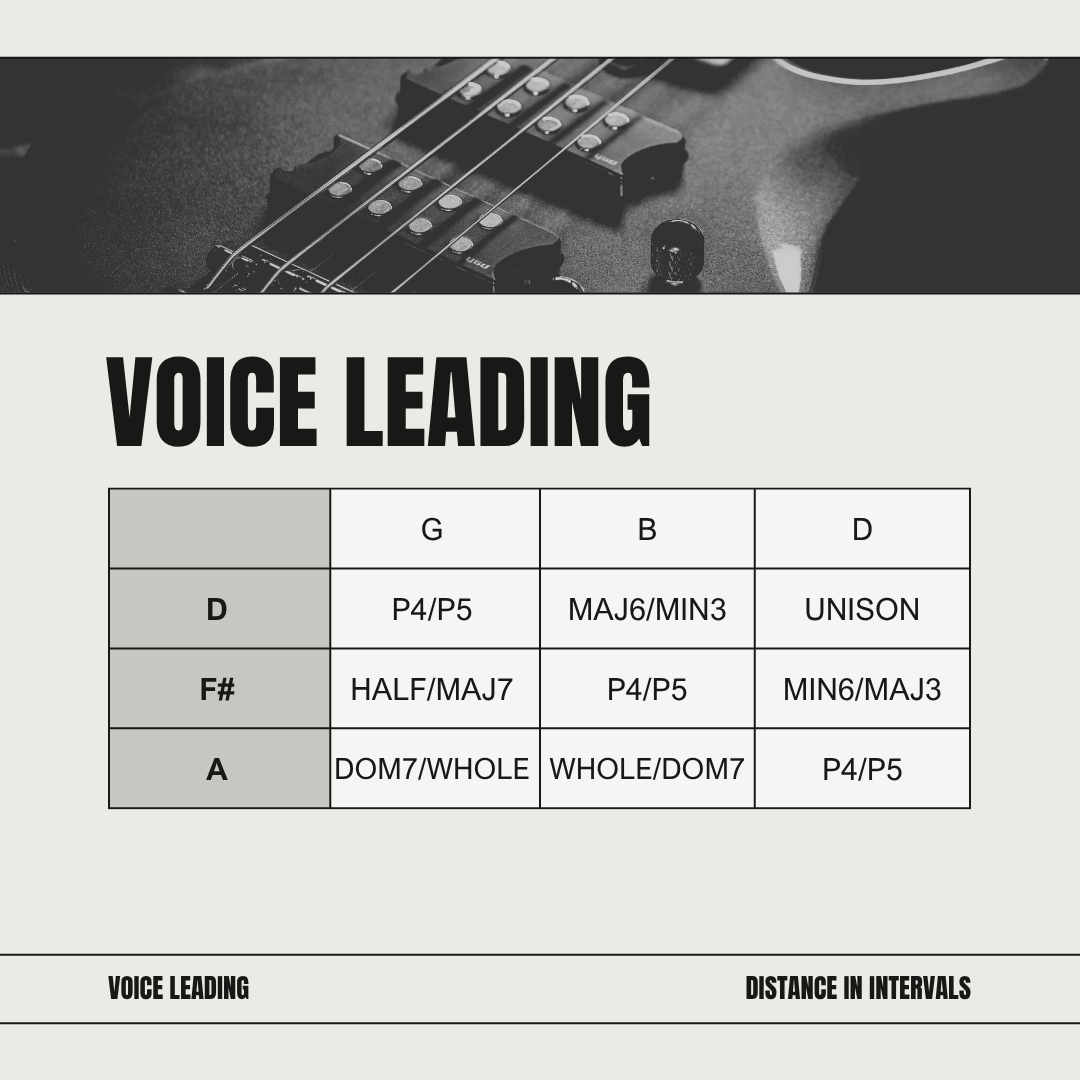
Voice Leading Map: D Major → G Major (Closest Note Connections)
Example 2: C# Minor → F Major
This example introduces more contrast between chords.
The graph highlights:
Less obvious connections
Chromatic movement opportunities
How voice leading works even when chords feel less related
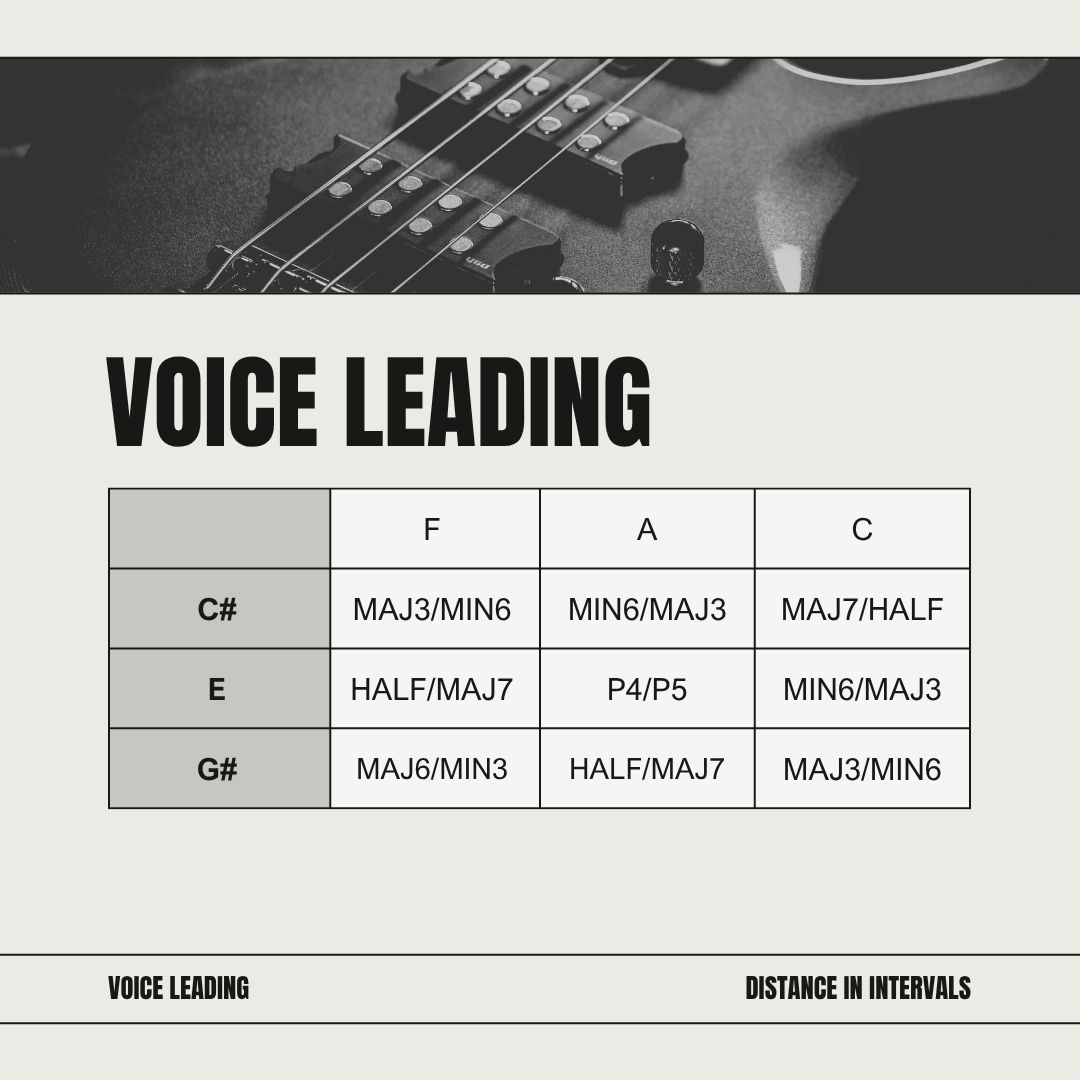
Voice Leading Map: C# Minor → F Major (Closest Note Connections)
Example 3: Application
Finally, I apply this system to the progression used in the J Dilla Backing Track
G minor → F minor → Bb7
This is where the concept becomes musical.
Instead of guessing your way through the changes, the graph shows:
The most efficient pathways between chords
Where tension and resolution naturally occur
How to construct lines that feel connected across the entire progression
These graphs aren’t just theoretical—they’re a tool for training your ear and your hands to recognize proximity in harmony.
Over time, this awareness becomes instinctive.
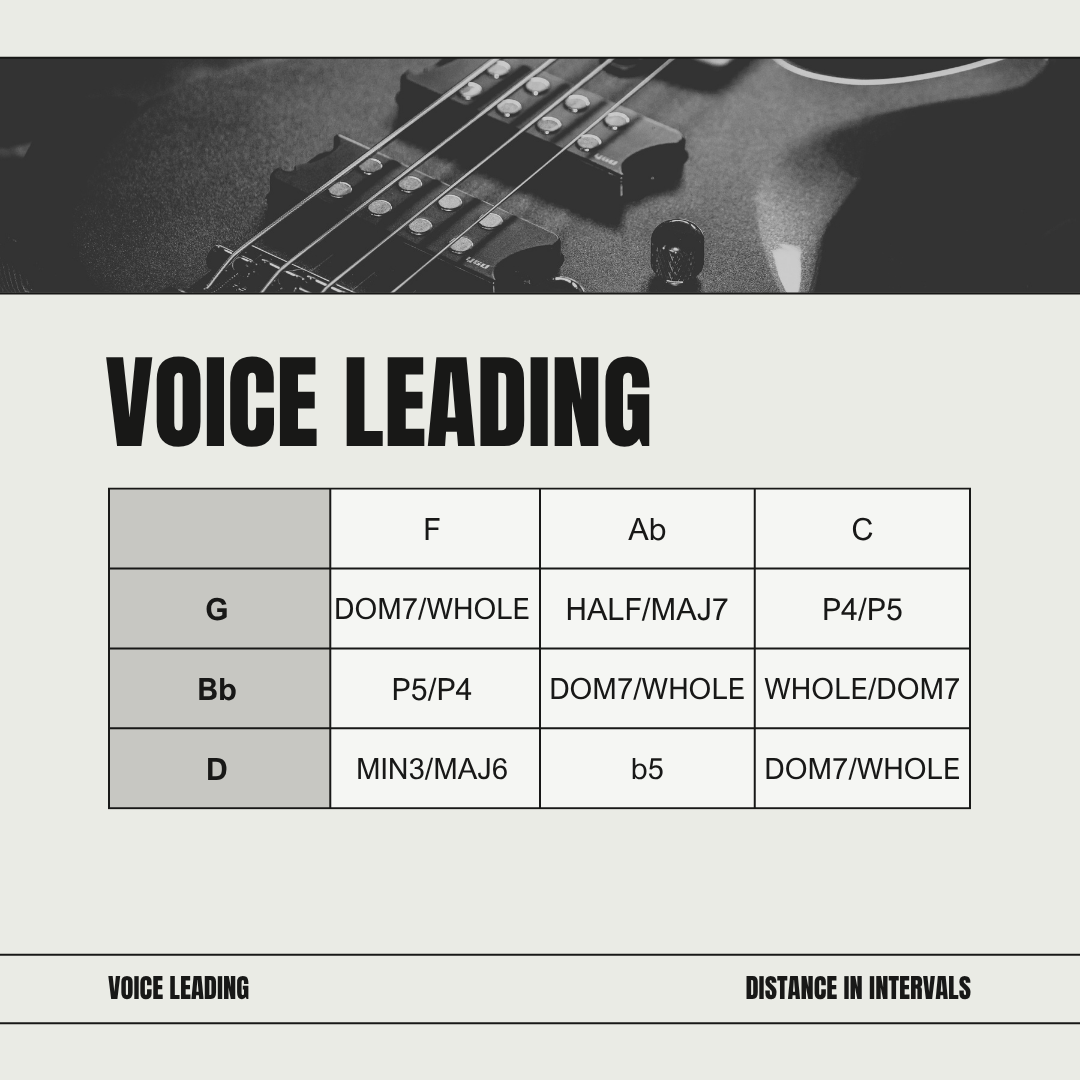
Voice Leading Map: G Minor → G Minor (Closest Note Connections)
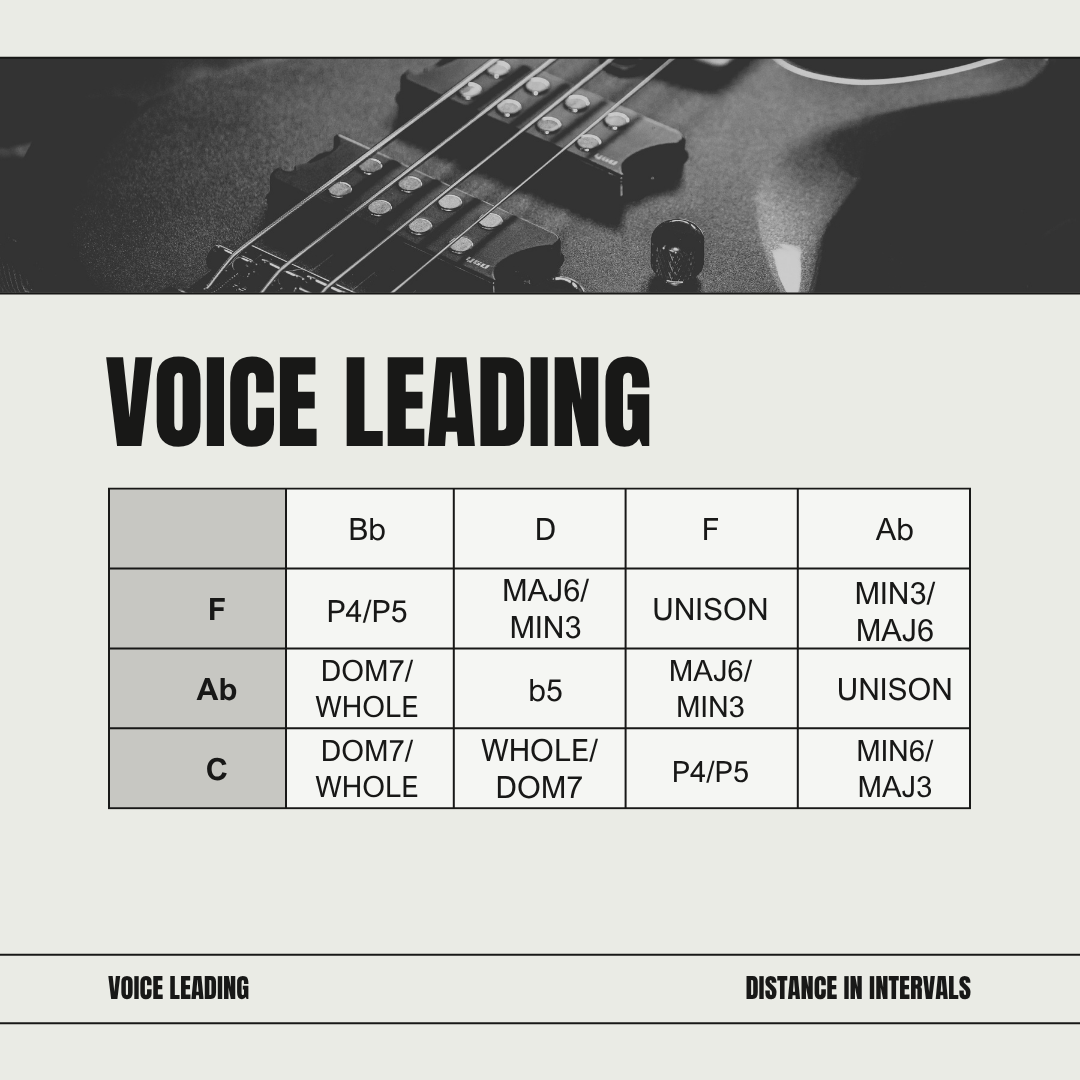
Voice Leading Map: F Minor → Bb Dominant (Closest Note Connections)
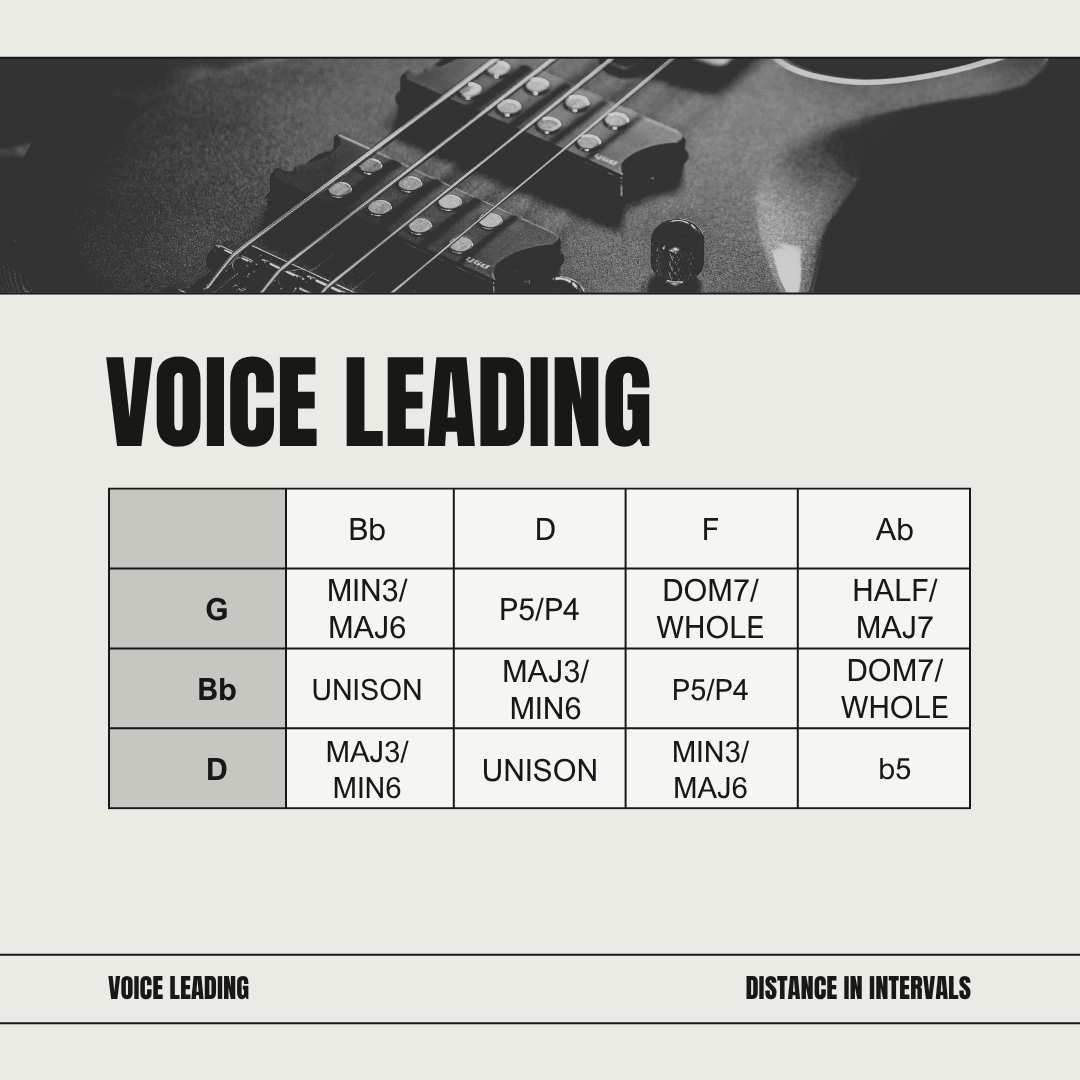
Voice Leading Map: Bb Dominant→ G Minor (Closest Note Connections)
Practical Application
Voice leading isn’t about playing more notes—it’s about choosing closer ones.
The smaller the movement, the stronger the connection.
And the stronger the connection, the more musical your bass lines become.
Next time you’re working on a bass line:
Identify the current chord
Look at the next chord
Find the closest available note
Half step → first choice
Whole step → second
Minor 3rd → third
Major 3rd → last “smooth” option
Build your line from that connection
This is only one side of the equation.
Voice leading determines what notes you choose.
Groove determines when you place them.
When both are working together, your bass lines don’t just function—they feel right.
If you want to take this further:
Explore how rhythmic placement shapes feel → [Dilla Groove Video]
Dive deeper into harmony → [Jazz Harmony in Hip Hop Bass]
Practice this directly → [Free Practice Kit]
Voice Leading Inside Groove Lab
Within Groove Lab, voice leading isn't treated as an isolated theory concept.
It's one of the musical decisions that allows a bass line to maintain continuity while harmony changes.
A Groove Lab study asks questions like:
Which note creates the smoothest transition?
Which note best supports the groove?
Which choice reinforces the motif?
Which creates tension?
Voice Leading Is One Musical Decision
Many bass players treat voice leading as the goal.
It isn't.
Voice leading is one of several musical decisions that shape a bass line.
A great bass line also depends on:
rhythm
note duration
articulation
repetition
space
harmonic function
Voice leading determines how the harmony moves.
Groove determines how the music feels.
When those ideas work together, bass lines become memorable—not because they use more notes, but because every note serves a purpose.
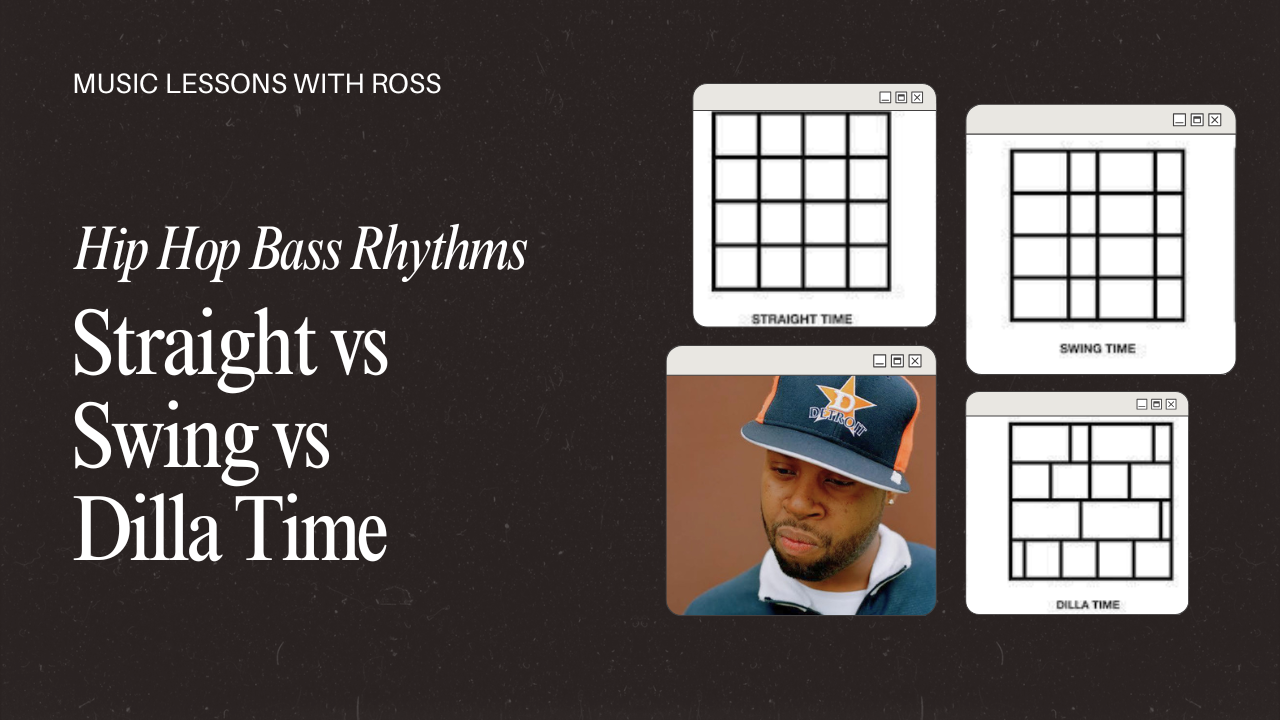
Straight vs Swing vs Dilla Time on Bass Guitar (Hip Hop Groove)
Straight vs Swing vs Dilla Time.
“For the last hundred years, the pulse of popular music has presented itself in two ways: even and uneven, straight and swung.”
— Dan Charnas, Dilla Time
In this lesson, we’ll break down straight vs swing vs Dilla Time on bass guitar, and how each groove feel applies to hip hop bass playing and modern groove theory.
Using a recreated 8-bar drum loop as our source material, the goal isn’t just to play along, it’s to hear, compare, and understand how small changes in note placement affect the pocket.
Rather than thinking in terms of patterns or memorized lines, we’ll focus on a more fundamental question:
Where does the note sit in time?
From there, we’ll break this concept into three distinct approaches:
straight (even subdivision)
swing (triplet-based feel)
Dilla Time (asymmetrical, hybrid placement)
Understanding the difference between these isn’t just about feel, it’s about developing control over your time, your sound, and your role in the groove.
This lesson connects directly to core hip hop bass groove concepts, including:
straight 8th note groove
swung 8th note feel
Dilla Time microtiming and pocket
hip hop groove theory for bass players
If you want to hear how this concept applies in a real musical context, you can also practice with my Dilla-inspired backing track, which this lesson is based on.
If you’d like to work through this concept step-by-step, I’ve put together a Dilla Time Groove Practice Kit for bass, which includes exercises, notation, and a drum loop designed specifically for developing time feel.
👉 Download the practice kit here:
Dilla Time Practice Kit
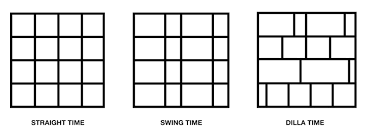
Straight Time
Is the practice of dividing a musical beat into equal, even parts. This rhythmic approach creates a sense of stability and predictability in a piece of music.
To practice use the arrangement below of straight 1/8th notes outlining a G minor and Ab major chord. Use the provided drum loop, which is a recreation of So Far To Go by J Dilla.
If you want to hear this applied in a real musical context, check out my King Kunta Hip Hop Bass Lesson, where groove placement and pocket are applied inside a full bass arrangement.
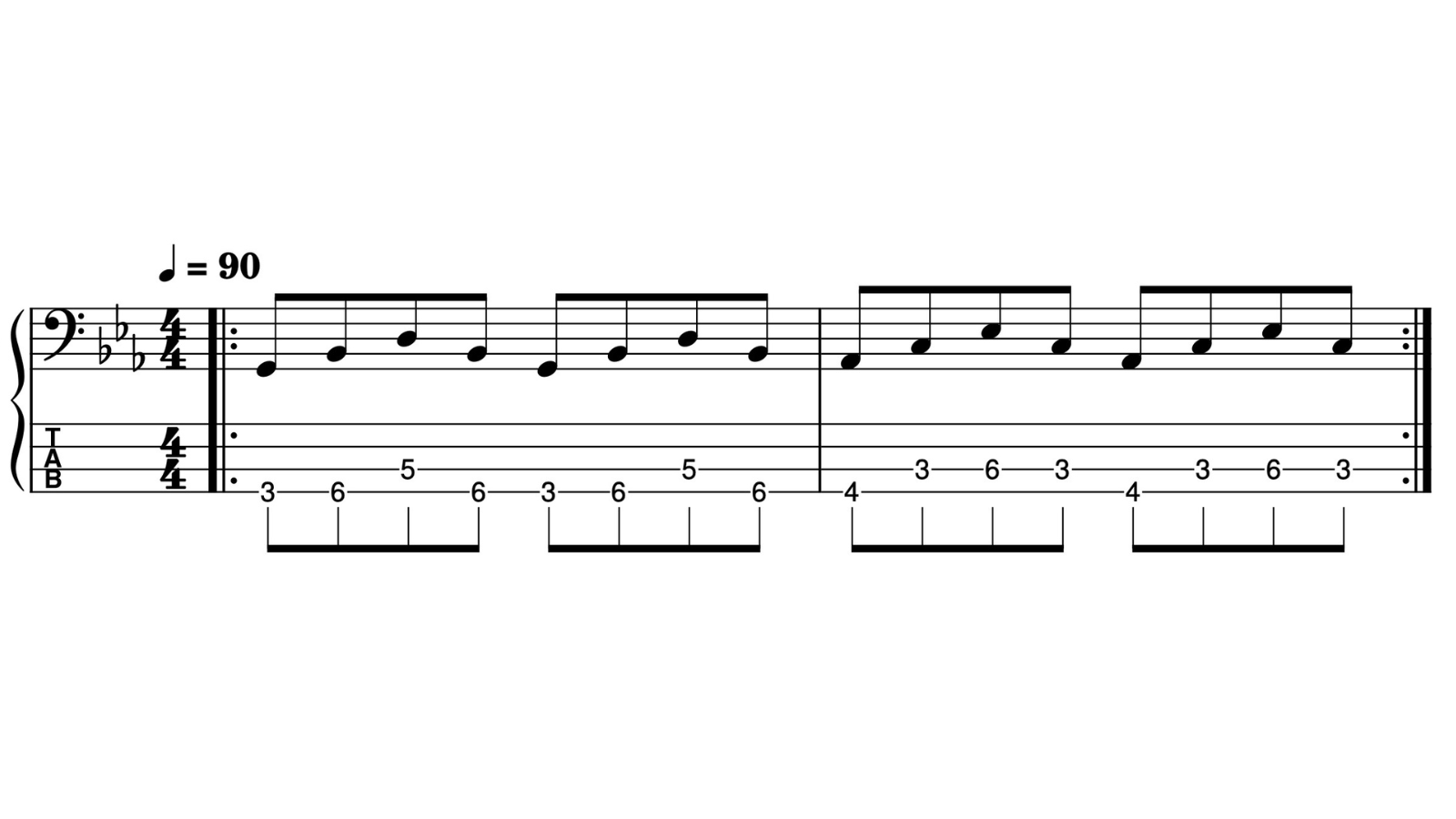
Straight 1/8th notes
Exercise 1: Straight 1/8th notes outlining G minor and Ab major triads
Swing Time
Is the practice of dividing the beat into three unequal parts rather than two equal parts. It creates a long-short rhythmic pattern where the first eighth note lasts roughly twice as long as the second.
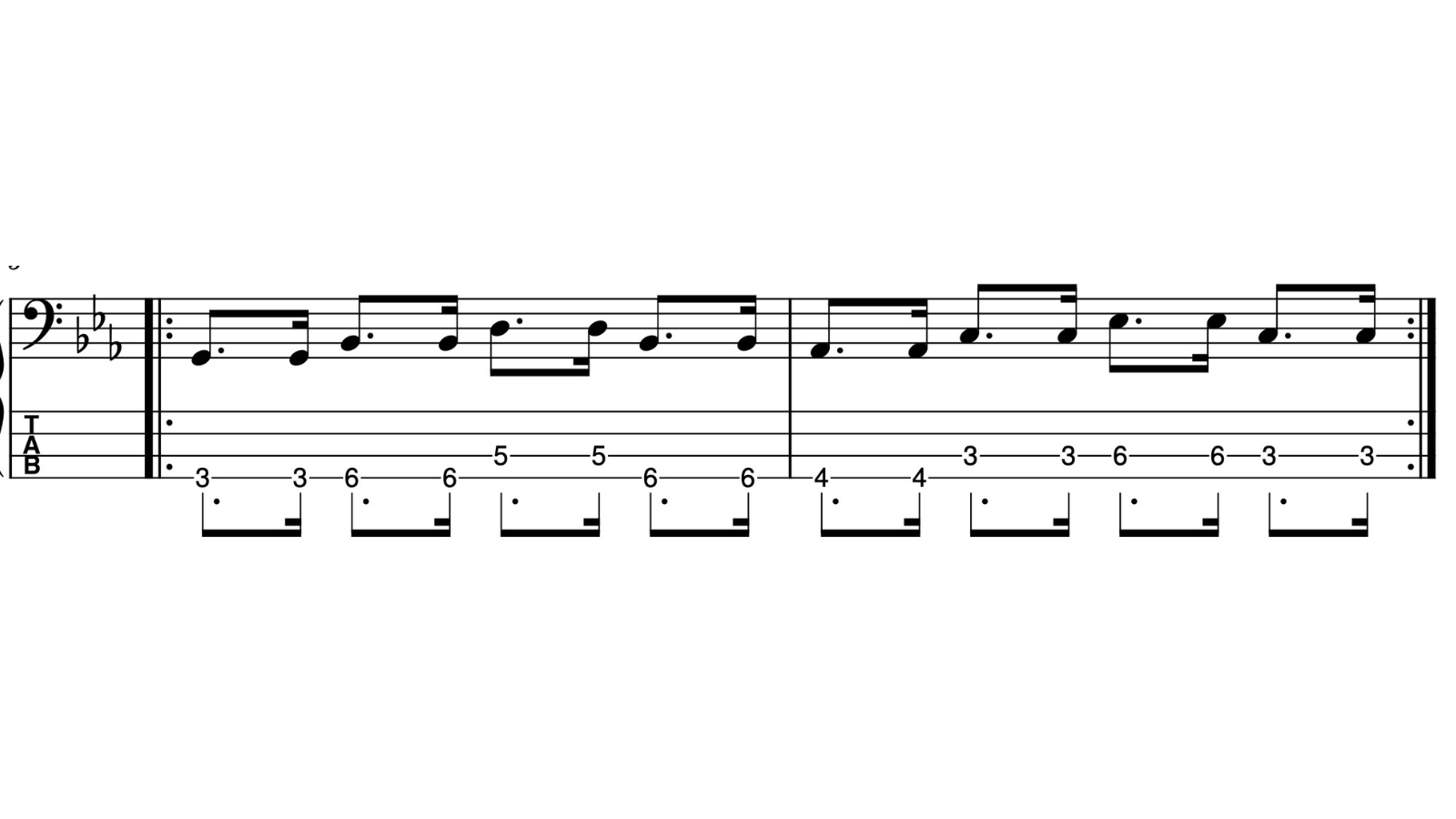
Swung 1/8th notes
Exercise 2: Swung 1/8th notes outlining G minor and Ab major triads
Dilla Time
Dilla Time (or J Dilla-style microtiming and groove placement) creates an asymmetrical feel between straight and swung rhythms.
“(Dilla Time) is the deliberate juxtaposition of multiple expressions of straight and swing time simultaneously, in a conscious cultivation of rhythmic friction for maximum musicality and maximum surprise.”
— Dan Charnas, Dilla Time
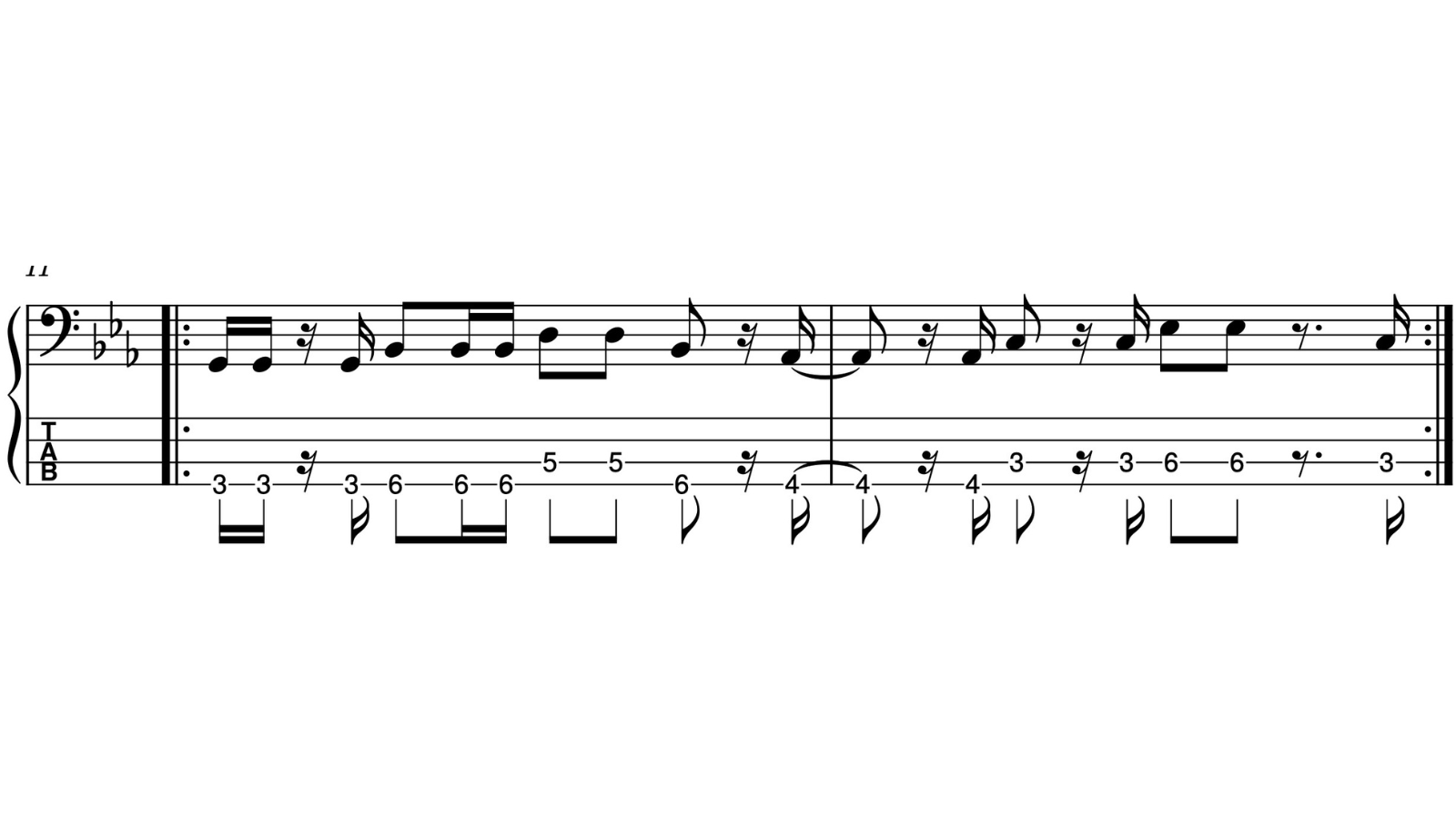
Dilla Time
Bass line outlining G minor and Ab major triads in Dilla Time
Understanding the difference between straight, swung, and Dilla Time isn’t just a theoretical exercise—it’s a practical way to take control of your time feel on the instrument.
When you can hear and intentionally adjust where your notes sit, you move beyond reacting to the groove and start actively shaping it.
That’s what separates playing along from actually locking in.
If you want to internalize this concept, the next step is to spend time with it in a focused way—looping the groove, comparing each feel, and developing consistency in your placement.
If you’re looking for hip hop bass lessons in Atlanta, or want to develop stronger groove, timing, and pocket control, these are the same concepts I work through with students in my lessons.
This is a key part of my Groove Lab framework, where we connect rhythm, harmony, and production concepts specifically for hip hop bass playing. The goal is to build practical control over timing, pocket, and note placement so your bass lines actually sit inside the music, not on top of it.
👉 Learn more about lessons:
Learn more about lessons
Hip Hop Groove on Bass Pt. 2: Harmonic Function, Dilla Time & Jazz Harmony
Most players approach Dilla-inspired groove as a rhythmic concept, but that’s only half the picture.
The bass lines that define artists like J Dilla and Nujabes don’t just sit in the pocket, they define harmony inside a laid-back, elastic feel.
👉 That’s what separates:
“looping over a beat”
vs.“playing music that feels intentional”
In Part 1, we focused on time and feel.
In Part 2, we’re focusing on harmonic function within that feel.For more direction on groove and harmony review our guide.
What is “Harmonic Function” on Bass?
1. Foundation: Outlining triads
Defines the chord while locking in with the drums.
2. Direction: Voice leading
Connects chords smoothly through use of common tones, neighboring tones, and leading tones.
3. Color: Extensions
Extensions are the notes in a chord beyond the initial triad, this includes 7ths, 9ths, 11ths, and 13ths.
They are defining characteristic of Jazz shared with Hip Hop to reinforce emotion.
👉 Key insight:
In lo-fi / Dilla-style music, you’re grounding the harmony of the samples, and connecting them to the drum groove.
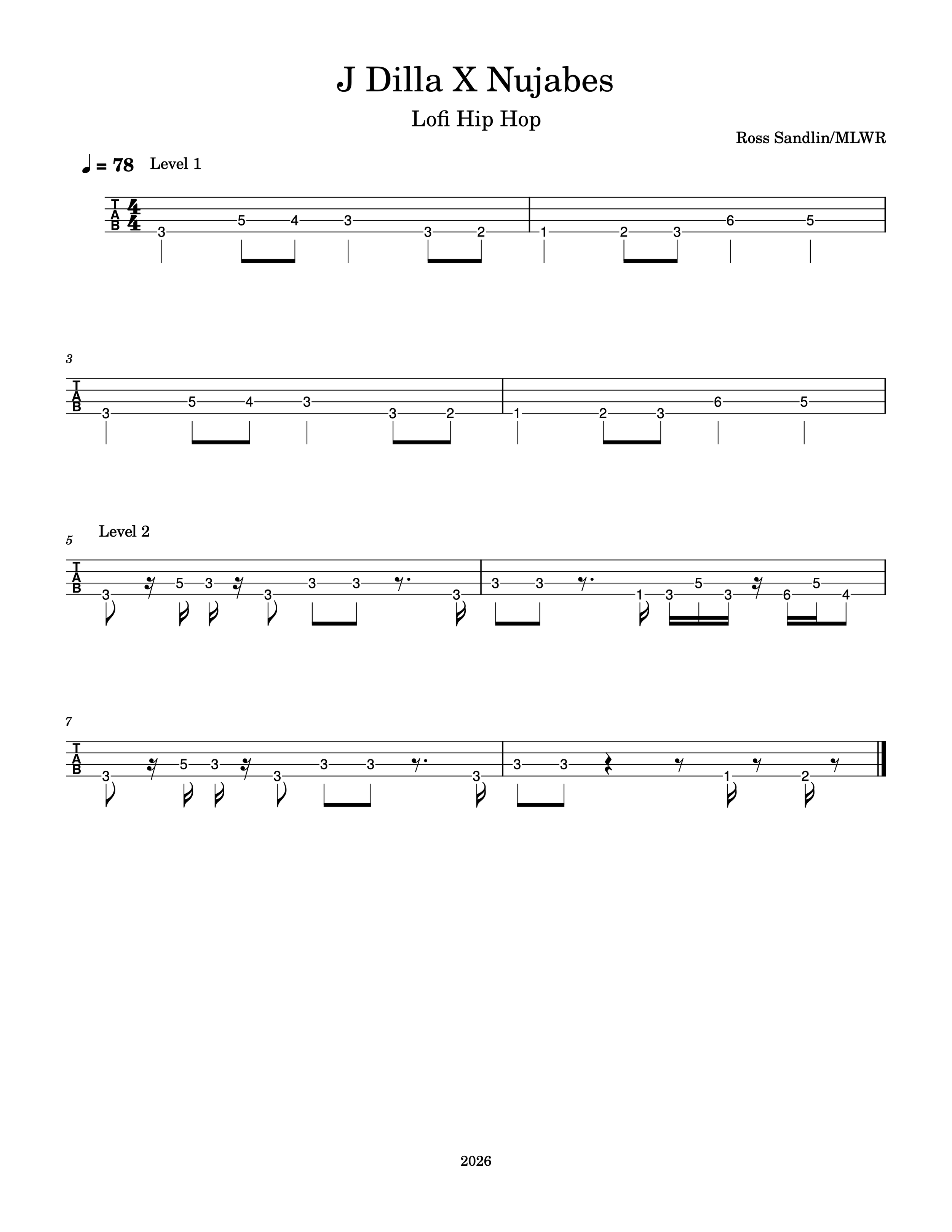
Harmonic Function Analysis:
Bass Arrangement Level 1
In the first measure we start with the root and fifth of G minor, when the harmony changes to F minor we look to see what notes from that chord are nearest in interval to the D of G minor. The fifth of F minor, C, is a whole step away. Using the concept of Voice Leading, we connect the D and C with a leading tone C#/Db. This use of chromaticism builds and releases tension in a pleasant way that is common in both Jazz and Hip Hop Harmony.
The F minor chord has been established, but in order to create motion we want to use similar leading tone motion to the root. It is also important that we maintain the rhythmic motif previously established, this gives us two 1/8 notes to use in our approach to the root. Using the note G allows use to move by half steps first to F#/Gb, then land on our target note of F. The G is not part of the triad of F minor, however, in the context of the chord it is functioning as the 9th, an extension or color tone.
In measure two of the arrangement, the harmony is still in F minor, but is going to switch to a Bb7 chord. To create motion that anticipates this chord change we invert the last phrase by playing F#/Gb to G moving towards the target note Eb. This note is not part of the Bb7 chord, but functions as an 11th another extension or chord tone. This note is followed by D, which is a common tone in both Bb7 and the G minor we are resolving to. It is a strong choice due to being a common tone between chords, and because it is a half step below our last note.
Harmonic Function Analysis:
Bass Arrangement Level 2
In the first measure we start with G and D again outlining the G minor, but we no longer use a leading tone to connect D to the C of F minor. Instead, we use whole step motion then immediately proceed to G and then return to C for two 1/8 notes. This phrase of G followed by two C’s is a repeated motif also used in measure two, again making use of the extension or color tone of a 9th within the F minor chord.
The practice of repeating motifs displaced across different beats and measures is a commonly used technique in J Dilla’s production. Check out our arrangement of E=MC2 for another demonstration of this idea.
Measure two ends with a syncopated phrase that starts with F, G, D, G, which makes further use of the 9th while adding the extension of a 13th. The use of which is commonly associated with Jazz pianists to add color and tension without changing the underlying triad. The end of measure two uses Bb, D, and Ab, which are all chord tones of the Bb7. Their use functions to outline the chord while using voice leading, because the Ab resolves down a half step to G in measure three.
Measure three repeats measure one, and the first two beats of measure four repeat measure two. On beats three and four of measure four we get a syncopated chromaticism from the F back to G, that functions as the fifth of the Bb7 followed by a leading tone resolving to the root of the G minor.
Practice Framework
When analyzing the harmonic function of a bass line, start with identifying triad chord tones. This allows you to understand how many notes are there to outline the chord.
Anything used that isn’t part of those chord tones is functioning as either a) and extension, or b) some sort of leading tone. By dividing notes into one of these three categories it’s much easier to identify how the notes of the bass line are functioning.
Once you’re comfortable identifying the function you can prioritize what the note selection sounds like in emotional terms.
This is a key point in translating bass lines you’ve learned into musical vocabulary you can use in writing your own ideas.
Practice with this hip hop bass backing track.
Download the full bass lesson.
Hip Hop Groove on Bass: Practicing Dilla Time with a Backing Track (Part 1)
Understanding Groove and Pocket in Dilla-Inspired Bass Lines
In this Dilla Time bass groove study, we’ll break down how J Dilla-inspired timing works on bass guitar and how to apply it inside modern hip hop groove playing.
This lesson focuses on developing control over straight vs swing vs Dilla Time feel, and how bass players can use microtiming to shape groove and pocket.
Part 1 focuses on groove and rhythmic phrasing, while Part 2 will explore harmony and how bass note choices interact with these rhythmic ideas.
This study connects directly to the Groove Lab framework I use to teach rhythm, harmony, and production for Hip Hop Bass
The goal is to understand how modern rhythm concepts drawn from hip hop can expand the rhythmic vocabulary of bass players across styles.
Key Groove Concepts in This Study
This backing track study focuses on three core rhythmic concepts:
• Subdivision awareness – internalizing 8th and 16th note rhythmic placement
• Note duration – controlling how long notes ring within the groove
• Syncopation – using off-beat phrasing to interact with the drum pattern
The study is divided into two levels of difficulty that allow players to gradually internalize the rhythmic language associated with Dilla-influenced groove.
If you’re new to these concepts, start with the breakdown of straight vs swing vs Dilla Time on bass guitar.
The Influence of Dilla Time on Groove
Most rhythmic traditions fall somewhere between the extremes of straight subdivision and swing.
While many variations exist across musical styles, J Dilla became famous for a rhythmic feel that merges these two concepts. His drum programming often places kicks, snares, and hi-hats slightly ahead of or behind the grid, creating a groove that feels both precise and loose at the same time.
In his book Dilla Time, author Dan Charnas describes this feel as:
“two time-feels fighting each other: straight and swung.”
This subtle micro-shifting of drum placement creates a push-and-pull sensation that has become highly influential across modern music.
For bass players, this groove concept provides a powerful framework for rhythmic study with applications across:
• R&B
• Gospel
• Funk
• Soul
• Jazz
• Hip Hop
To hear how bass lines function within this rhythmic language, you can also explore my study of “E=mc²” by J Dilla, which breaks down how bass interacts with this groove concept.
Practice Framework: Internalizing Subdivision
The goal of this study is to internalize rhythmic subdivisions both in sync with and slightly offset from the drum groove.
Instead of forcing the bass line to sit rigidly on the grid, players learn to:
• observe the placement of drum hits
• experiment with rhythmic placement
• feel how subtle shifts affect the overall pocket
This awareness allows bass players to move from simply counting rhythms to feeling the groove physically.
Level 1: Establishing the Groove with Eighth Notes
Level 1 uses primarily eighth-note phrasing that resembles the way traditional straight-time grooves function.
From a technical perspective, these rhythms are correct and consistent. However, when placed against the micro-shifted drum programming in the backing track, the groove can feel slightly unstable or tense.
This tension is intentional.
The goal at this stage is to:
• establish rhythmic consistency
• internalize the drum placement
• begin feeling how straight subdivision interacts with the drum groove
Rather than trying to correct the tension, players should observe and feel it, using it as a foundation for deeper rhythmic development.
Level 2: Letting the Groove “Breathe”
In Level 2, the bass line begins to breathe within the drum groove instead of resisting it.
This level introduces:
• 16th-note syncopation
• intentional rests
• controlled note duration
These elements allow certain parts of the drum pattern to become more prominent, creating a dynamic push-and-pull relationship between the bass and the drums.
One particularly important phrase appears in measure 8 of the arrangement.
The rhythm unfolds as follows:
Beat 1: two eighth notes
Beat 2: quarter-note rest
These first two beats establish a familiar straight-time feel.
However, beats 3 and 4 introduce asymmetrical 16th-note phrasing:
Beat 3
• eighth-note rest
• 16th-note
• 16th-note rest
Beat 4
• 16th-note rest
• 16th-note
• eighth-note rest
In a traditional straight groove, this phrasing might feel unstable. Within Dilla-influenced rhythmic language, however, it becomes incredibly powerful.
The irregular placement interacts with the micro-shifted drums, producing a groove that feels alive, dynamic, and physically compelling—the kind of rhythmic tension that makes people instinctively want to move.
For a deeper look at how this groove connects to harmony, see the follow-up lesson on hip hop groove and harmonic function on bass.
Rhythm and Harmony Working Together
These rhythmic motifs do not exist in isolation.
The rhythmic phrasing works in tandem with harmonic note choices, which outline chords and guide the direction of the bass line.
In Part 2 of this article, we will examine how the note choices in this arrangement:
• outline the underlying harmony
• create tension and release
• connect through voice leading
Together, rhythm and harmony form the foundation of effective bass lines.
Practice Strategy
Start with Level 1.
Focus first on establishing the rhythmic pulse using quarter notes and eighth notes.
Once that foundation feels comfortable:
Add the remaining notes gradually
Listen carefully to how the bass part interacts with the drum groove
Notice when the rhythm feels slightly ahead or behind
Level 2 introduces more complex phrasing but can still be approached methodically.
Practice by:
• isolating one-bar phrases
• repeating them with the backing track
• gradually connecting them into two-bar phrases
Always start by internalizing the rhythm first, then attach pitch and note choices once the groove feels natural.
You can hear these concepts applied in a full arrangement in the King Kunta bass groove study, where timing and pocket are applied in a real musical context.
Coming Next
In Part 2, we will explore the harmonic side of this study, examining how the bass line outlines chords and creates motion through voice leading.
Together, these groove and harmony concepts form the foundation of modern bass playing across jazz and hip hop influenced styles.
Practice the Backing Track
You can find this study and other groove exercises in the studio’s Backing Track Library.
Core Groove & Harmony in Action: Student Submissions
Jazz Harmony and Hip Hop Groove: A Study in Bass Line Construction
A central focus of the studio curriculum is understanding how groove and harmony function together in modern bass playing. One way we do that in Groove Lab is by using custom backing tracks.
Much of today’s groove-based music, especially in hip hop, neo-soul, and contemporary R&B, draws directly from the harmonic language and rhythmic sensibilities developed in jazz. Rather than treating these traditions as separate styles, the goal of this curriculum is to help bassists recognize their shared lineage and practical relationship.
One musician who clearly demonstrates this connection is Robert Glasper. Glasper’s work bridges jazz harmony with hip hop and modern groove production, showing how extended chords, vamp-based structures, and improvisational language can exist naturally inside contemporary rhythm sections.
For bassists, this creates a unique challenge.
Many players learn groove from funk and hip hop traditions while studying harmony through jazz theory. However, these concepts are often taught independently, leaving musicians unsure how to integrate them in real musical contexts.
The studio curriculum addresses this gap by focusing on three core ideas:
Groove as a rhythmic framework built on strong subdivision and pocket awareness
Harmony as a structural guide for note choice and bass line movement
Interaction between groove and harmony, where rhythmic phrasing supports harmonic clarity
To explore these concepts in practice, students have been working with a Robert Glasper–inspired backing track designed to simulate the type of harmonic vamp frequently heard in modern jazz-influenced hip hop.
Rather than practicing these ideas in isolation, students apply them inside a musical groove context, which allows rhythmic feel and harmonic awareness to develop simultaneously.
The following examples highlight student submissions from this study. With permission, I’ve selected two performances to illustrate how these concepts appear in real practice and how targeted feedback can help players refine their groove, harmonic clarity, and improvisational decision-making.
Core Groove & Harmony in Action: Student Submissions
One of the most effective ways to evaluate musical growth is through applied study over time.
Over the past several months, students in the studio have been working with a Robert Glasper–inspired backing track designed to explore the relationship between groove, harmony, and bass line construction. The track provides a framework for practicing:
16th-note subdivision and groove placement
Harmonic outlining and voice leading
Intentional note duration
With permission, I’m sharing excerpts from two student submissions to highlight how these core concepts develop in real practice.
The goal of this analysis is not to focus on perfection, but to examine decision-making, control, and musical growth.
Student A: Subdivision Stability and Groove Control
Specifically, the “and-a” 16th-note figure on beat two gradually resolves into an eighth-note pattern landing on the “and” of beat two and the downbeat of beat three. This subtly changes the rhythmic density and weakens the intended subdivision.
Correction Strategy
The solution is continued work toward stronger internalization of the 16th-note grid.
This can be reinforced through:
Slower tempo practice with a metronome
Subdivision exercises that isolate 16th-note groupings
Practicing groove phrases at multiple tempos while maintaining the same subdivision clarity
Strengthening internal subdivision ensures that rhythmic phrases remain intentional rather than drifting toward simpler rhythmic structures under pressure.
Positive Outcomes
Student A has shown clear improvement in 16th-note internalization over the months of working with this track.
Most importantly, they demonstrated the ability to make real-time adjustments during the performance, correcting their phrasing while the groove continued. That level of self-awareness and control indicates meaningful development in rhythmic command.
This kind of responsiveness is a strong indicator of growing musical maturity.
Student B: Note Duration and Rhythmic Interaction
In the improvisation section, Student B frequently uses legato note duration, allowing notes to ring across subdivisions.
While legato playing can be expressive, in this context it occasionally conflicts with the articulation of the drum groove, reducing rhythmic clarity.
Correction Strategy
The primary focus moving forward is controlled note duration.
This can be improved by:
Practicing right-hand muting techniques
Revisiting the studio’s core concept of intentional note duration
Developing awareness of how articulation shapes the interaction between bass and drums
Shorter, more intentional note lengths allow the bass line to lock into the rhythmic architecture of the groove.
Harmonic Strengths and Development Areas
Student B demonstrates clear awareness of voice leading and shared chord tones, which is an important step toward strong harmonic outlining.
However, there are several opportunities to further strengthen the musical statement:
Expanding 16th-note rhythmic phrasing
Using syncopation more intentionally
Applying note duration as a rhythmic tool
Incorporating chromatic approach tones to strengthen harmonic motion
Development Strategy
To integrate these elements more naturally, the next step is practicing arpeggios alongside the studio’s core rhythm concepts.
This allows students to become comfortable applying harmonic ideas and rhythmic vocabulary simultaneously, rather than treating them as separate skills.
Positive Outcomes
Student B showed noticeable improvement in note duration control and 16th-note feel, along with growing awareness of harmonic function.
Most encouragingly, they took creative risks during the improvisation section, exploring voice-leading ideas and chord tone relationships.
That willingness to experiment is a strong indicator of developing confidence and deeper musical understanding.
Growth in improvisation comes from informed experimentation, and this submission reflects meaningful progress in that direction.
Why This Process Matters
Documenting student work like this allows us to see how groove, harmony, and technique evolve together over time.
Rather than isolating concepts into disconnected exercises, the goal of the studio curriculum is to develop bass players who can:
Maintain rhythmic clarity inside complex grooves
Outline harmony intentionally
Shape phrases through articulation and note duration
Make real-time musical decisions while playing
These submissions represent the kind of practical growth that happens when core concepts are applied consistently in a musical context.

Jazz Harmony in Hip-Hop Bass: Wayne Shorter’s “Footprints” Influence on So Fresh, So Clean (Part 2)
Hip-hop bass lines often borrow directly from jazz harmony. In Part 2 of this series, we explore how Wayne Shorter’s “Footprints” vamp influences the harmony of So Fresh, So Clean, and how bassists can apply jazz voicing concepts, minor 10ths, and chord tone reordering to modern hip-hop grooves.
If you found this through a search for hip hop bass lessons or hip hop bass lessons in Atlanta, this is Part 2 of a deeper dive into where that groove actually comes from. In Part 1, we looked at syncopation and chord vamps in So Fresh, So Clean. Here, we go one level deeper by tracing a specific jazz quotation hidden inside that same bass line.
This kind of cross-genre translation, finding the jazz DNA inside a hip hop groove, is exactly the lens Groove Lab is built around: not just learning bass lines, but understanding why they work.
The Jazz Vamp and Its Influence on Hip-Hop Harmony
One of the clearest harmonic connections between jazz and hip-hop is the concept of the vamp, as discussed in part 1.
In modal and funk jazz, a vamp is a repeating two-chord progression that establishes a tonal center while allowing space for rhythmic and melodic development. This structural approach has had a direct influence on hip-hop harmony.
In So Fresh, So Clean, the progression closely resembles the vamp from Footprints by Wayne Shorter.
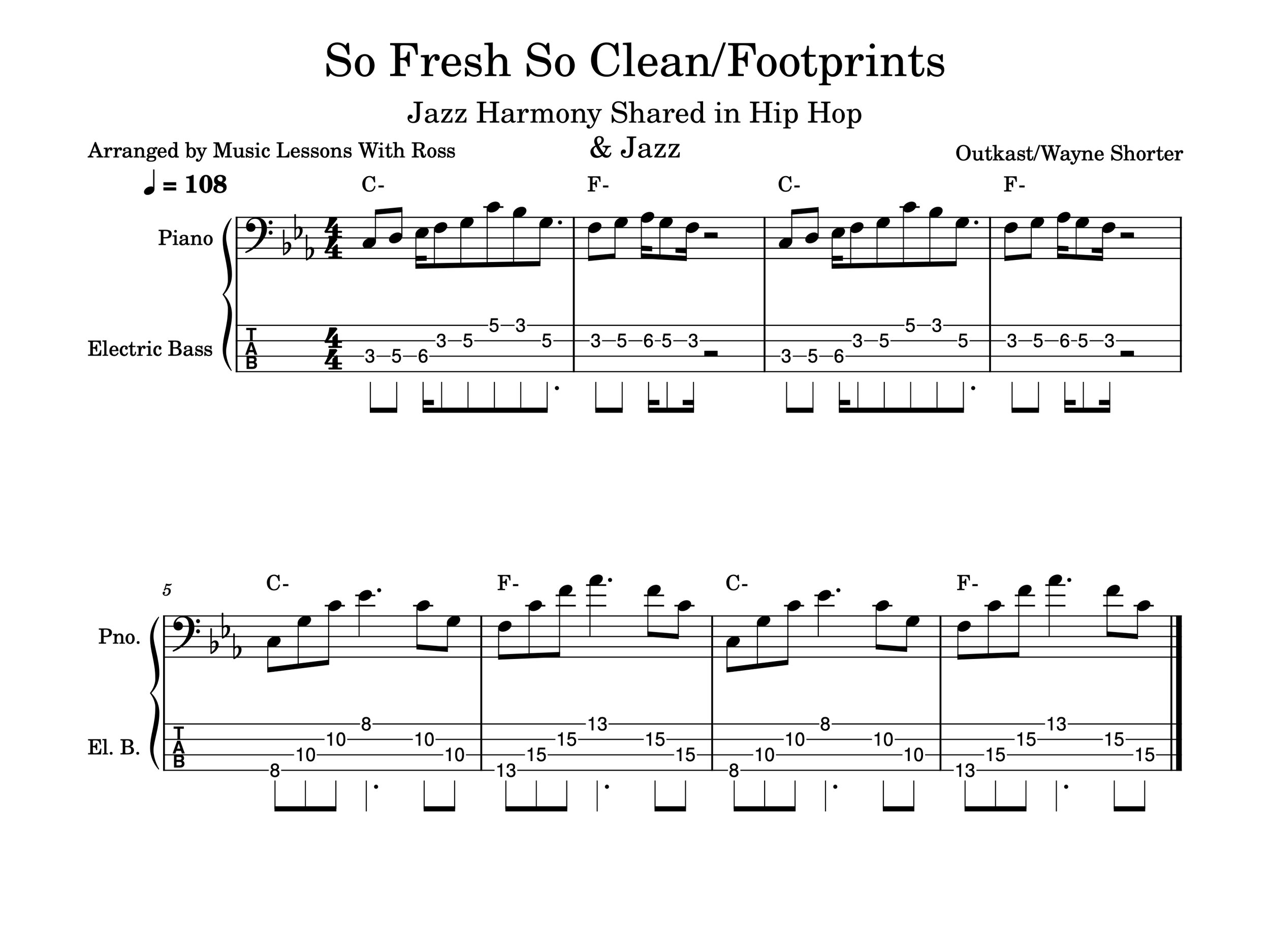
For this study, I took the ostinato pattern from Footprints, adjusted it into 4/4 time, and applied it to So Fresh, So Clean. The result highlights how jazz harmonic devices translate naturally into hip-hop contexts.
Using Minor 10ths to Create Open Jazz-Inspired Bass Lines
What makes the Footprints ostinato particularly compelling is how it outlines harmony. The voicing resembles the way a jazz pianist might structure a chord rather than how bassists traditionally outline one.
Instead of a simple root–third–fifth sequence, the pattern follows:
Root – Fifth – Octave – Minor 10th – Octave - Fifth
Applied to both C minor and F minor, this ordering introduces a key difference: the minor third placed above the octave.
Reordering Chord Tones for Modern Hip-Hop Groove
This spacing creates a more open, resonant sound. There is greater distance between chord tones, which results in a broader harmonic texture — something often associated with jazz piano voicings.
For bassists, this presents an important opportunity:
Experiment with the intentional ordering of chord tones.
Move beyond sequential arpeggios.
Explore wider interval spacing for tonal depth.
Borrow structural ideas from jazz standards and apply them to hip-hop grooves.
The shared harmonic language between jazz and hip-hop makes this crossover especially powerful.
These types of harmonic concepts are exactly what we explore in the Groove Lab, all designed to help you write better hip hop bass lines.
Reflection
Use these questions to internalize how chord-tone ordering shapes the emotional character of a bass line:
What changes when you place the minor third above the octave instead of within the first octave?
Try playing the So Fresh, So Clean bass line with a standard root-third-fifth arpeggio, then with the Footprints-inspired voicing. What's different about how each one feels?
Where else in your own playing do you default to sequential arpeggios out of habit rather than intention?

Groove and Jazz Harmony in Hip Hop (Part 1)
Why Bassists Should Study Hip Hop
If you've searched for Hip Hop bass lessons or Hip Hop bass lessons in Atlanta, you're probably looking for more than a collection of songs to memorize. You're trying to understand what makes hip hop bass lines feel so good.
Why does a simple bass line lock in so deeply with the drums? How do repetition, space, rhythm, and harmony work together to create a groove that feels effortless?
Those are the questions we explore throughout Groove Lab.
Groove & Harmony
Hip hop is one of the richest musical traditions for studying bass because it places groove at the center of the music. Rather than relying on constant harmonic movement or technical complexity, many of the genre's most memorable bass lines create momentum through rhythm, note placement, repetition, articulation, and subtle harmonic color.
This lesson explores how jazz harmony helped shape the language of hip hop bass and why understanding that relationship can make you a more creative bassist. Instead of simply learning what notes to play, you'll begin to understand why hip hop bass lines work, and how those same principles can influence your own playing, songwriting, and improvisation.
Arranging the Melody of So Fresh, So Clean for Bass
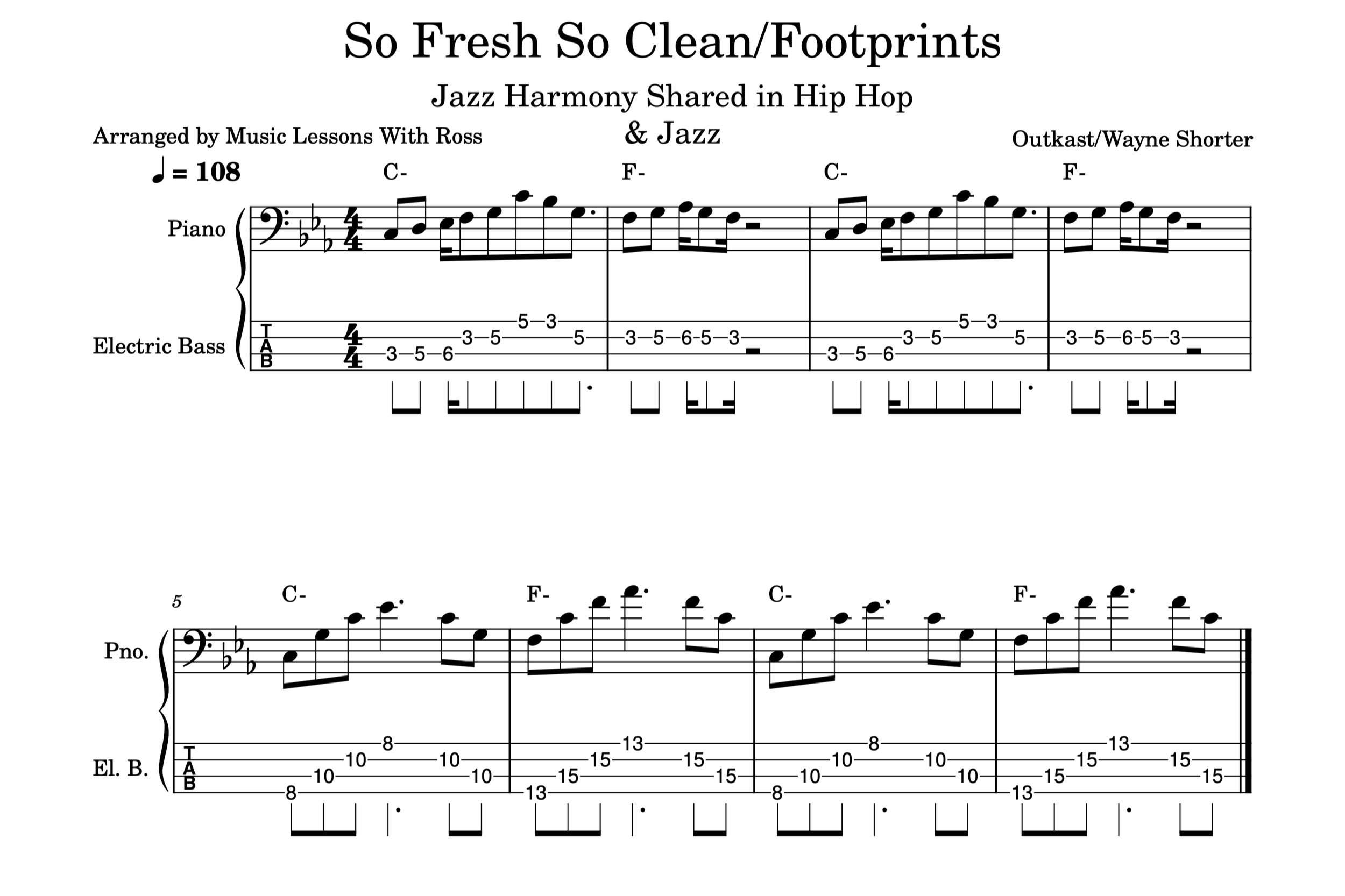
In this study, I’ve arranged the melody of So Fresh, So Clean by Outkast for bass guitar in order to examine how groove and jazz harmony inform hip-hop composition.
Groove Construction
From a groove standpoint, which is what we explore in the Groove Lab, the song relies heavily on syncopation — not merely in the sense of playing “off” the beat, but in creating tension against the underlying drum pattern.
The melody is built primarily from steady 8th-note phrasing, with relatively sparse use of 16th notes. On its own, this might suggest rhythmic stability. However, the drum groove leaves noticeable space on beats two and four. This creates a subtle but powerful rhythmic contrast: the melodic line sustains forward motion while the drums articulate space.
This push-and-pull relationship is deeply rooted in jazz phrasing traditions, where rhythmic tension is often created not by density, but by strategic placement against the rhythm section. Hip hop inherits this structural and aesthetic influence, particularly in its emphasis on pocket, space, and conversational interaction between musical layers.
Rather than thinking of syncopation as “off-beat,” it is more accurate to think of it as rhythmic counterpoint — a deliberate dialogue with the drum groove.
Harmonic Function
Harmonically, So Fresh, So Clean is built around a two-chord vamp in the key of E♭ major. A vamp, or repeating harmonic loop, provides a stable tonal environment over which rhythmic variation becomes the primary expressive device.
The use of static harmonic movement is another direct lineage from jazz — particularly modal and funk-influenced traditions.
For example, modal jazz frequently relies on extended vamps rather than fast-moving chord progressions. A clear example is Impressions by John Coltrane, which sustains long stretches of D minor tonality to allow rhythmic and melodic development to take center stage.
Similarly, many hip-hop producers have sampled jazz recordings built on vamp-based harmony. A notable example is Swahililand by Ahmad Jamal, which was famously sampled in Stakes Is High by De La Soul, produced by J Dilla.
In both jazz and hip hop, the harmonic simplicity of a vamp shifts expressive focus toward:
Rhythmic nuance
Tone and articulation
Micro-timing
Melodic development
When arranging the melody of So Fresh, So Clean for bass, this static harmonic framework allows us to focus on phrasing, note length, and rhythmic interaction with the drums rather than complex chord navigation.
Another song explored in the Groove Lab that uses a two chord vamp is King Kunta, be sure to download the accompanying hip hop bass arrangement.
Reflection
The goal of the Groove Lab Reflection isn't simply to add new ideas that are interesting. It’s to integrate and internalize the concepts that make bass lines memorable and fun to listen to.
Use the questions below to reflect on your comprehension of the two core ideas, syncopation and chord vamps.
Syncopation
What is syncopation and does it show up in this arrangement?
Which rhythmic ideas created the greatest sense of movement?
How did syncopated notes change your perception of the groove compared to notes played directly on the beat?
Were there moments where anticipation or delayed resolution made the phrase feel more expressive?
If you simplified the rhythm, what musical effect would be lost?
Chord Vamp
What is a chord vamp and how is it used in this arrangement?
How did the repeated harmonic progression influence your rhythmic decisions?
Did the static harmony make you focus more on articulation, rhythm, or note duration?
How might you approach this bass line differently if the chords changed every measure?
What opportunities does a chord vamp create that a rapidly changing progression does not?
In Part 2, I’ll explore how I’ve quoted the bass line from a famous Modal Jazz song from Wayne Shorter inside the track of So Fresh So Clean. Including notation and in depth analysis.
Walking Bass Concepts in How High the Moon — Bass Arrangement Analysis
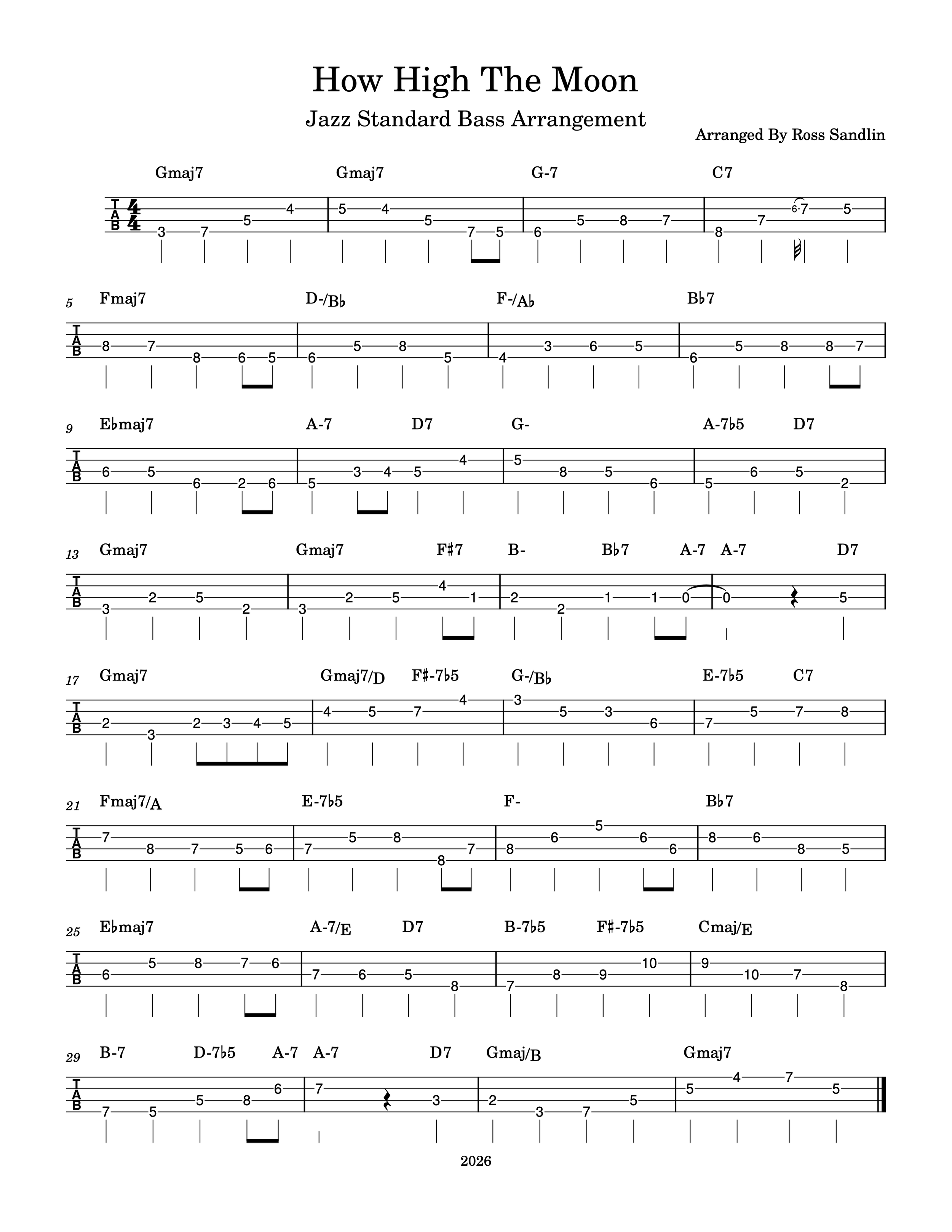
This walking bass arrangement focuses on voice leading, enclosures, diminished substitutions, and functional harmony to demonstrate how professional bass lines create forward motion through jazz standards. The concepts below highlight how specific harmonic tools shape melodic direction, tension, and resolution across the form.
Core Concept Categories
1. Enclosures
Enclosures create melodic tension by surrounding a target note before resolving to it, strengthening harmonic clarity and line momentum.
Measures using enclosures
Measure 2 – Enclosure approaches the B♭ in measure 3, selected for smooth voice leading.
Measure 5 – Enclosure reinforces harmonic movement into the substituted harmony.
Measure 9 – Enclosure anticipates the upcoming A in measure 10, creating forward momentum.
Why it matters:
Enclosures improve melodic direction and help walking bass lines sound intentional rather than scalular.
2. Common Chord Substitutions
Common chord substitutions introduce chromatic movement while maintaining functional harmonic direction.
Measures using substitutions
Measure 5: Fmaj7 → Dm over B♭
Measure 18: Gmaj7 → F#dim
Measure 20: C7 → Edim
Measure 22: Fmaj7 → Edim
Measure 27: Two diminished chords used as common chord substitutions
Measure 29: B♭7 → Ddim
Why it matters:
Diminished passing harmonies create smoother bass movement and richer harmonic color without disrupting progression function.
3. Voice Leading and Inversions
Voice leading ensures that bass lines connect chords smoothly using the nearest available chord tones, often reinforced through inversions.
Measures demonstrating voice leading or inversion
Measure 6 → 7: Stepwise voice leading transitions into a chord inversion in measure 7.
Measure 3: Target tone (B♭) chosen specifically for voice-leading continuity.
Multiple substitution measures: Chromatic diminished substitutions reinforce descending voice-leading motion.
Why it matters:
Strong voice leading allows walking bass lines to “flow” naturally across the progression rather than sounding disconnected.
4. Secondary Dominant Function
Secondary dominants temporarily tonicize upcoming harmonies to increase tension before resolution.
Measure using secondary dominant
Measure 14: F#7 introduced as a secondary dominant to strengthen harmonic pull.
Why it matters:
Secondary dominants create forward drive and reinforce functional harmony awareness in jazz bass playing.
Educational Takeaway
This arrangement demonstrates how professional walking bass lines rely on intentional harmonic decision-makingrather than scale-based note selection alone. By combining enclosures, diminished substitutions, voice leading, inversions, and secondary dominants, bassists can create lines that clearly outline harmony while maintaining strong rhythmic flow.
Practice Applications: Internalizing Walking Bass Concepts
Use the following exercises to apply the harmonic and voice-leading ideas demonstrated in this arrangement. Practicing these concepts in isolation first will make them easier to recognize and apply in real performance settings.
1. Enclosure Practice
Select a target chord tone (root, 3rd, 5th, or 7th).
Approach the note using upper and lower neighboring tones before resolving.
Practice over a static chord first, then apply to moving progressions.
Create at least three enclosure variations for the same target tone to develop flexibility.
Goal: Develop the ability to intentionally emphasize harmonic targets while maintaining melodic interest.
2. Common Chord Substitution Practice
Identify measures in the progression where diminished substitutions occur.
Practice alternating between:
The original chord
The substituted diminished chord
Listen carefully to how chromatic movement changes the sense of forward motion.
Goal: Build awareness of how substitutions create tension while preserving functional harmony.
3. Voice Leading and Inversion Practice
Practice connecting chord tones using the smallest possible interval movement (half step, whole step, or minor third).
Play the same progression multiple times, each time starting from a different inversion of the chord.
Focus on smooth horizontal motion rather than jumping between roots.
Goal: Train the ear and hands to prioritize smooth harmonic connection rather than root-only thinking.
4. Secondary Dominant Recognition
Isolate the section containing the secondary dominant.
Practice emphasizing the guide tones (3rd and 7th) of the dominant chord before resolving.
Experiment with chromatic approach notes leading into the resolution chord.
Goal: Strengthen recognition of temporary tonicization and its role in harmonic tension.
5. Chunk-Based Mastery
Practice 2–4 measures at a time, looping each section until the movement feels automatic.
Analyze each chunk:
What are the chord tones being targeted?
Where are enclosures used?
Which notes create voice-leading continuity?
Once comfortable, reconnect the chunks into the full form.
Goal: Build reliable muscle memory while reinforcing harmonic understanding.
6. Creative Expansion Exercise
Rewrite one measure of the line using:
A different enclosure pattern
A different inversion
An alternative chromatic approach
Compare the musical effect and decide which version creates the strongest motion.
Goal: Move from imitation to controlled creative application.
Key takeaway:
Practicing walking bass effectively means analyzing why each note functions the way it does. When enclosures, substitutions, and voice leading are practiced intentionally, bass lines become clearer, more melodic, and harmonically supportive across any jazz standard.
Autumn Leaves – Bass Arrangement Study (Tabs + Learning Guide)
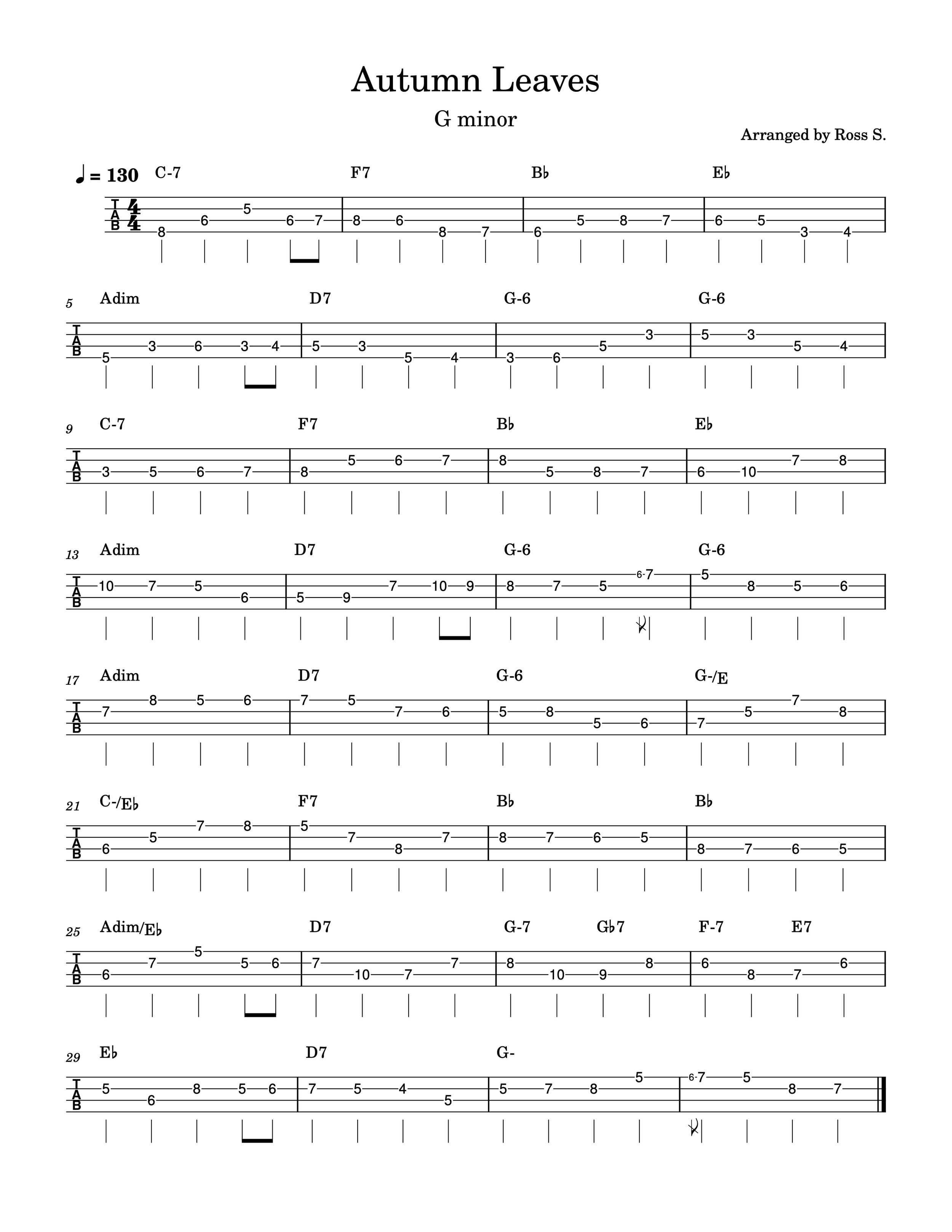
This bass arrangement of Autumn Leaves is designed as a focused study for developing walking basslines. The arrangement highlights practical musical concepts that help bassists understand how lines function within real musical settings.
What This Arrangement Teaches
1. Outlining Harmony Through Arpeggios
Strong walking bass lines clearly define the harmony by emphasizing chord tones. Arpeggios provide the primary framework for this process, allowing bassists to outline each chord while maintaining forward motion. In this study, most measures are built from arpeggiated chord tones, reinforcing the skill of hearing and navigating harmony directly from the bass.
2. Smooth Voice Leading Between Chords
Effective walking lines “flow” because of voice leading—connecting chords using the nearest available tones. This often involves moving by half step, whole step, minor third, or major third into the next chord tone. Practicing these short interval connections helps bassists create lines that sound intentional, smooth, and harmonically connected across the progression.
3. Practical Use of Chromatic Passing Tones
Chromatic notes are frequently used to connect chord tones that are a whole step apart. In walking bass playing, these notes are often placed as passing tones on weaker beats or as eighth-note approaches, helping maintain forward motion while avoiding sustained dissonance. This arrangement demonstrates how chromatic approaches can create momentum and clarity when leading into the next chord tone.
Autumn Leaves Bass Study
Practice Suggestions
Practice Slowly First
Begin at a slow tempo to ensure each note clearly outlines the harmony and feels rhythmically consistent. Gradually increase tempo only after the line feels relaxed and controlled.Learn the Line in Small Chunks
Work in short sections of 2–4 measures at a time, looping each segment repeatedly until it feels mechanically comfortable and memorized. Once each section is secure, connect the chunks to build the full progression.Analyze the Harmony and Scale Degrees
Identify how each note relates to the chord: root, third, fifth, seventh, or chromatic approach tone. Understanding the scale-degree function helps you see the logic behind the line rather than memorizing shapes.Create Your Own Variations
After identifying the chord tones and approaches, experiment by changing the order, direction, or rhythmic placement of the same harmonic tones. This helps you develop new walking bass ideas while staying grounded in the same harmonic structure.
Studies like this reflect the same groove, harmony, and musical literacy concepts taught in my Atlanta and online bass lessons, where students learn how to build bass lines, understand harmony, and perform confidently in real musical settings.